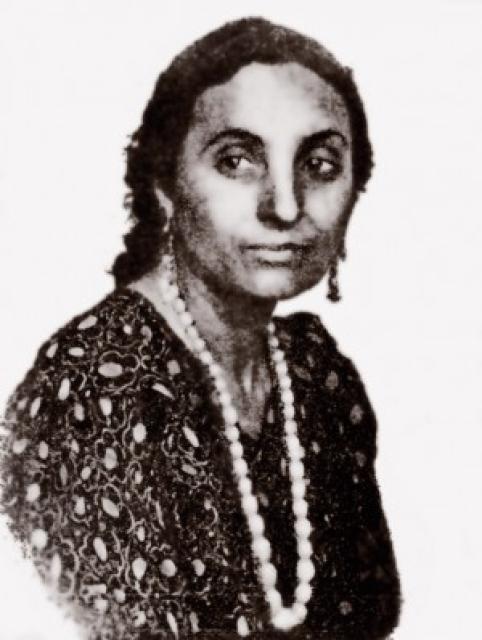
Bronislawa Wajs
 Poland
- Papusza: A Trailblazing Romani Poetess
- Challenging Social Norms
- A Literary and Social Turning Point
- The Myth of Exile
- Film Adaptation
- Biography
- Creative Legacy
Papusza: A Trailblazing Romani Poetess
Papusza, a pioneering figure in Romani literature, rose to prominence as the leader of a Romani settlement in post-1949 Poland. Her groundbreaking poetry collection, "Pieśni Papuszy" (Songs of Papusza), has left an enduring legacy, earning her widespread recognition and a monument in the Polish city of Gorzów Wielkopolski. Her story has also inspired the acclaimed theater production "Romantyczna Muza" by the Romani theater company "Romanes."
Challenging Social Norms
The role of women in Romani society has historically been constrained by strict social norms. Among Polish nomadic Roma, corresponding with men was considered "immoral." Despite these restrictions, Papusza boldly sent her manuscript to the Polish writer and critic Jerzy Ficowski, who published it in the magazine "Problemy" without her consent.
A Literary and Social Turning Point
Ficowski's publication not only exposed Papusza's correspondence to the Romani community but also coincided with the introduction of the Settlement Law (1950), forcing Roma to abandon their nomadic lifestyle. These events sparked a backlash within the Romani community, leading to Papusza's rejection and eventual ostracism. The emotional toll of being cast out proved too much for her, and she sought refuge in a psychiatric hospital, where she remained until her death in 1987.
The Myth of Exile
Ficowski later wrote a book about Papusza, which, along with coverage in the media and the support of poetess Lina Kostenko, contributed to the widespread myth that Papusza was exiled for her writing. This belief, however, has been challenged by scholars.
Film Adaptation
The enduring appeal of Papusza's story has inspired a feature film titled "Papusza," directed by Joanna Kos-Krauze and Krzysztof Krauze, which premiered at the Karlovy Vary International Film Festival in 2013.
Biography
Born Bronewoj Wojcich, Papusza's early life is shrouded in mystery. She taught herself to read and write as a teenager and survived the atrocities of the Nazi regime. She was married at age 15 to Dionizy Wajs, a musician from the same clan as her stepfather.
During World War II, an estimated 35,000 out of 50,000 Polish Roma perished. Papusza's family survived in hiding, enduring hardships and fear. This traumatic experience inspired her longest poem, "Bloody Tears — Our Sufferings at the Hands of German Soldiers in Volhynia (1943-1944)."
Papusza began writing regularly in 1950. Her unique and powerful poetry captures the essence of Romani life, with its honesty, purity, and connection to nature. She became a member of the Polish Writers' Union in 1962 and remains an inspiration to Romani writers and artists to this day.
Creative Legacy
"Gile Romani Papuszy Akre Szerestir Uthodi" (Songs of Papusza), published in 1956, stands as a testament to Papusza's pioneering spirit and her unwavering commitment to her people and their culture. Her poetry has been translated into multiple languages and continues to be celebrated as a vibrant and authentic expression of the Romani experience.


