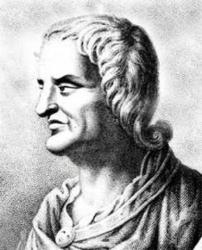
Laura Battiferri
 Italy
Italy- Laura Battiferri: Renaissance Poetess and Muse
- Early Life and Education
- Marriages and Artistic Connections
- Move to Florence and Literary Career
- Legacy and Influence
- Death and Burial
Laura Battiferri: Renaissance Poetess and Muse
Laura Battiferri, born in Urbino in 1523, was an Italian Renaissance poetess and a notable figure of her time. She left behind a significant epistolary legacy, showcasing her intellectual and literary prowess.
Early Life and Education
As the illegitimate daughter of a nobleman and a priest, Laura received a comprehensive education from her father, focusing on history, philosophy, and scripture. She was recognized as his daughter in 1543, granting her a respectable social standing.
Marriages and Artistic Connections
Laura married twice, her first husband being Vittorio Sereni, an organist at the Duke of Urbino's court. After his death, she wed renowned Florentine sculptor and architect Bartolomeo Ammanati, who became her lifelong companion. Laura's social circle in Rome included prominent figures such as Pope Paul III, Princesses Livia and Ortensia Colonna, and the artist Ersilia Cortese del Monte.
Move to Florence and Literary Career
In 1555, Laura and her husband relocated to Florence, where she became a part of the intellectual elite. She was elected into the Urbino Academy of Assorditi and the Sienese Accademia degli Intronati, becoming the first female member of both.
In 1560, Laura published her "Primo libro delle opere toscane," marking her literary debut. The collection included her famous sonnets dedicated to her husband, "Fi dia," as well as other verse forms and prose pieces.
Legacy and Influence
Laura Battiferri's poetry showcased her wit, intellect, and command of language. Her epistolary correspondence reveals her friendships with prominent intellectuals and her active participation in Renaissance cultural life. As a woman of her time, she faced challenges but also left a significant mark on literary and social circles.
Death and Burial
Laura passed away on November 3, 1589, and was buried in the Jesuit church of San Giovannino in Florence. Her husband ordered a painting by Alessandro Allori, depicting the "Christ and the Canaanite Woman," which still hangs in the church, showcasing Laura as an elderly woman kneeling behind the Canaanite woman.