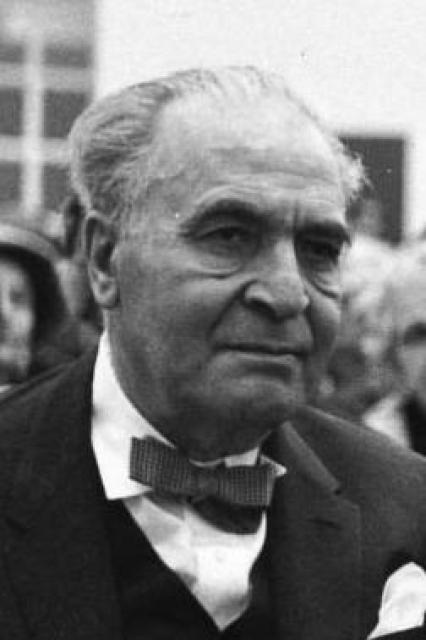
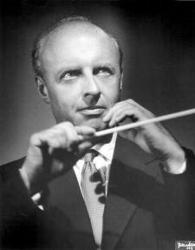
Bruno Walter
 USA
USABiography of Bruno Walter
Bruno Walter was an American conductor and composer of German origin. He is considered one of the most famous conductors of the first half of the 20th century. Walter was born in Berlin, but from 1933 to 1939 he lived and worked in various countries until he finally settled in the United States in 1939. Although his real name was Bruno Schlesinger, he started using the surname Walter in 1896 and officially changed his name in 1911, becoming a naturalized Austrian.
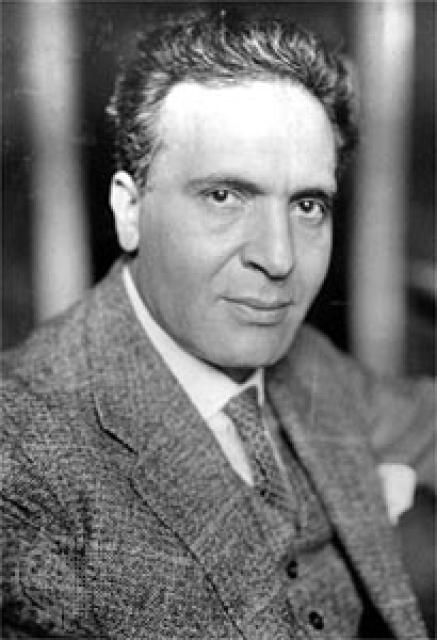
Early Life and Career
Walter was born on September 15, 1876, into a middle-class Jewish family. He began studying music at the Stern Conservatory at the age of eight, and when he was nine, he made his first public appearance as a pianist. However, after attending a concert by the virtuoso pianist and conductor Hans von Bülow in 1889 and the Bayreuth Festival in 1891, he changed his mind and decided to pursue a career as a conductor. His conducting debut took place in 1894 at the Cologne Opera with Albert Lortzing's opera "Der Waffenschmied". In the same year, he moved to the Hamburg Opera as the chorus director, where he met and befriended Gustav Mahler, whom he idolized and later became closely associated with his music. In 1896, Walter became the conductor of the opera house in Breslau, a job secured for him by Mahler. It was around this time that he changed his surname, most likely to have a less Jewish-sounding name. He worked in Bratislava in 1897 and then moved to the Riga Opera in Latvia in 1898. In 1900, Walter returned to Berlin and became the Royal Conductor of Prussia at the Staatsoper Berlin, succeeding Franz Schalk in this position. His colleagues included Richard Strauss and Karl Muck. In 1901, Walter accepted Mahler's invitation to be his assistant at the Court Opera in Vienna, and his first production at this theater was Verdi's "Aida". In the following years, Walter's fame grew, and he was invited to work throughout Europe, including Prague, London, and Rome.

Later Years
A few months after Mahler's death in 1911, Walter conducted the orchestra at the premiere of Mahler's "Das Lied von der Erde" and "Symphony No. 9" in Vienna the following year. Although he became an Austrian citizen in 1911, he left Vienna in 1913 for Munich, and in January of the next year, he conducted his first concert in Moscow. He completed his career in Munich in 1922 and went to New York in 1923, where he worked with the New York Symphony Orchestra at Carnegie Hall. Walter also performed in Detroit, Minnesota, and Boston. Returning to Europe, Walter received an invitation to work in Berlin again, this time as the music director of the Städtische Opera in Charlottenburg in 1925 and in Leipzig in 1929. In 1926, Bruno Walter made his debut at La Scala in Milan, and from 1924 to 1931, he was the principal conductor of the German Seasons at Covent Garden. When the Nazis came to power in Germany in 1933, Walter had to leave for Austria. Adolf Hitler had a personal dislike for the famous Jewish conductor. In 1938, Germany annexed Austria, and Walter, who was recording in Paris at the time, obtained French citizenship. He also had to use all his influence to save his daughter, brother, and sister. In November 1939, he left for the United States, which became his new home. He settled in Beverly Hills, California, where he had many foreign neighbors, including the German writer Thomas Mann. In the United States, Walter worked with renowned American orchestras, including the Chicago Symphony Orchestra, Los Angeles Philharmonic, New York Philharmonic, and Philadelphia Orchestra. From 1946 onwards, he frequently traveled to Europe, performing at the Edinburgh Festival, Salzburg, Vienna, and Munich. He died of a heart attack in his home on February 17, 1962.