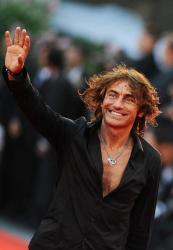
Bryan Ferry
 Great Britain
- Bryan Ferry: The Rise and Fall of Roxy Music
- Early Life and the Birth of Roxy Music
- The Peak of Their Career
Bryan Ferry: The Rise and Fall of Roxy Music
An English musician, singer, and songwriter, Bryan Ferry rose to musical prominence in the early 1970s. Formed in 1971, Roxy Music quickly became a worldwide sensation. The band's success was largely due to the brilliant combination of talented musicians: Phil Manzanera (guitar), Andy Mackay (saxophone), and of course, the exceptional singer and songwriter Bryan Ferry. Ferry was more than just an "exceptional singer"; he epitomized an impeccable lifestyle—a rarity in the music industry. Bryan Ferry remained a true artist in both his work and personal life.

Early Life and the Birth of Roxy Music
Bryan Ferry was born on September 26, 1945, in the small town of Washington, County Durham. His father, a former miner, worked as a night watchman. Young Bryan grew up as a working-class boy in the English northwest, raising pigeons in the backyard. His first band, the Banshees, played in working-class pubs from 1964. Their repertoire included blues and rock and roll classics, some of which later appeared on Ferry's album, "These Foolish Things." Ferry sang and played harmonica, while in his subsequent, more professional band, Gas Board, he also played saxophone. This soul-band octet, featuring four saxophonists and a trumpet player, performed an eclectic mix of originals and covers, often resembling Bobby Bland. They played in the Newcastle area, where Ferry studied linguistics and fine arts at the local university. For a time, the band was managed by Chris Wright, who later became a co-chairman of the Chrysalis firm.

In 1968, Bryan moved to London and drifted through various jobs before deciding to try his luck in music. The young Ferry arrived with an abundance of ambition and confidence. Despite his strong northern accent, he attempted to impress London audiences with "art on the level of Milton and Shakespeare"—but the initial response was minimal. Before forming Roxy Music, Ferry had hoped to join King Crimson as their vocalist. Though he was rejected, Robert Fripp recognized that "this guy has potential in other areas," and gave Ferry a recommendation to his label mate David Enthoven, head of Island subsidiary EG. The label initially wanted Ferry to make a solo album with session musicians, but when Bryan rejected all of their suggestions, he was given carte blanche.

Graham Simpson, Roxy's first bassist, had also played with Gas Board. He had met Ferry while studying English literature in Newcastle and was the only musician Bryan knew in London. Simpson later disappeared without a trace, possibly even dying. As Ferry recalled, he was a strange character. "For nearly a year Graham was in a kind of limbo. He was becoming increasingly withdrawn, completely out of touch. A week before the Great Western Festival, he left for good, and then I got John Porter, who had been the Gas Board guitarist. But that didn't work out, so the producer of the first album, Pete Sinfield, found us a friend of his called Rick Kenton, who played on 'Virginia Plain.'" Kenton, however, didn't stick around either. For their European tour, Roxy recruited American Sal Maida, who'd previously played briefly in New York with various obscure bands. Other lineup changes ensued.

Of interest was the brief attempt to involve former Nice guitarist Dave O'List. "We thought it was going to be great at first, but...He was a fabulous inspired player. When he was in the mood, he could come up with such extraordinary solos that he was a joy to work with..." In early 1971, Brian Eno and saxophonist Andy Mackay joined the band, and in the summer, drummer Dexter Floyd was added. Floyd left before any recordings were made, and his place was taken by Paul Thompson, who soon became known as one of the world's finest drummers. After much effort and deliberation, Phil Manzanera became the guitarist. Despite the group being composed of relatively unknown musicians, the early reviews of their live performances were highly favorable, with John Peel championing them on radio and TV and Richard Williams in the press, promoting numerous photos of the band members in various arty poses and dressed in flamboyant costumes with heavy makeup. Not surprisingly, Roxy Music were often compared to David Bowie and other glam rockers, but unlike Bowie, they had a strong sense of humor, and their album covers often parodied popular advertising.

Roxy Music subverted consumer culture and its aesthetics, using the stylistic devices of the atomic age—one could say that, artistically, Andy Warhol was their mentor. In music, the band managed to express this philosophy even more fully. Ferry brought to the European rock scene the experience of his generation and its newfound attachment to its cultural and historical roots, which manifested itself in a keen interest in Europe's past. The nostalgia for the refined grotesquerie and surreal symbolism of Dylan-like ballads was combined with an unwavering admiration for the sophisticated erotic elegance of courtly cultures from various epochs, ranging from the sentimental-erotic flirtation of the Regency era to the dramatically stylized sensuality of early twentieth-century decadence. The band's name itself, taken from an old silent movie poster, was not only a parody of the retro fashion but also a tribute to nostalgia.
The Peak of Their Career
Ferry and his band proved to be brilliant stylists. They embraced a hundred styles, favoring mystifying innuendo and carefully worked-out aestheticism borrowed from all the decadent eras of European history. They brought back into fashion the past, mixing the antique with the invented. This is not just about clothes and colors, although they were the most noticeable. It mainly concerns the conceptual ideas and aesthetics of Roxy Music's musical creativity. Their debut album, "Roxy Music," became a bestseller in England, and the classic single "Virginia Plain" was met with equal success (re-released five years later, it demonstrated how, in their quest to restore the past, the band looked to the future, anticipating the emergence of the punk wave). Although Ferry had announced that he would not release singles that had been previously released on albums, this promise was dismissed after the single "Pyjamarama."
The album "For Your Pleasure" was produced by Chris Thomas, who had previously worked with Procol Harum. Here, as before, the band demonstrates the use of old clichés; however, the main guarantee of creative success was the combination in one collective of individuals, each of whom had their own unique style, but which, nevertheless, corresponded to the general task set by Bryan. The dominant sounds were the rock-style guitar playing of Phil Manzanera and the clear, precise drumming of Paul Thompson, the surviving giants of the psychedelic era; the exotic notes were added by Ferry's own piano playing in the spirit of Terry Riley and John Cage; the idiosyncratic howling of Mackay's saxophone and oboes (note the saxophone duet with drums in "Editions of You," Bowie's "Grey Lagoon," or the gospel "Psalm"—that's where this tandem achieves its most refined sounds and seems to play hide-and-seek with the guitar and synthesizer). Eno, on his instrument, did not extract the sound colors that had become routine; the irritating and compactly condensed passages synthesized by him gave the ensemble's music the Gothic intonations of the Upper Rhine. The electronic instruments provided a somewhat cacophonous sound, "enhanced" by solo inserts—it is interesting that Roxy Music was the first band to finally combine the sound of the synthesizer with other electronic instruments.
Thanks to this, the early Roxy albums offer what could most accurately be called an "assortment"—an excellent example of the new possibilities of entertaining rock songs. At the same time, old ideas about intermezzo, chordal accompaniment, melody, and semantic division were destroyed. Ferry's purely English song lyrics had a symbolist depth and were difficult to perceive by ear alone without the printed text; however, the band's music was more "accessible," inviting entertainment rather than contemplation. "Let there be a feast in the time of plague!"—the revelation permeating, perhaps, their most significant work, the composition "Psalm" from the album "Stranded."
Before the release of this album, personal differences between Ferry and Eno over the band's musical future reached a critical point. Ferry decided that the band's sound had too many non-musical tones and replaced Eno with former Curved Air violinist and keyboardist Eddie Jobson, whose instruments blended magnificently with Mackay's winds in melodic terms. Also joining the lineup was former Big Three and Quatermass bassist John Gustafson.
Although Manzanera and Mackay contributed lyrics to the album "Stranded," this album, as well as Ferry's first solo album, "These Foolish Things," turned out to be almost an authentic reflection of the creative and aesthetic credo of the latter. On the ruins of the broken hopes of the "flower children," Ferry and his band cultivated a fantasy of individualism, a fantasy of "lust and desire," no longer bound by any words about duty, progress, and social prosperity. Steeped in decadence and hedonism, Roxy declared the inevitable and final "sunset of Europe." "A Song for Europe"—Ferry's mournful and sarcastic mockery of the British Tories' slogan "Fanfare for Europe." The old concept, which had long been in circulation among the cultural elite of the West, was seen by Ferry as a bargaining chip for mass consciousness.
Another interesting interpretation was Ferry's rendering of Bob Dylan's famous song "A Hard Rain's A-Gonna Fall" from the album "These Foolish Things." With his sliding intonations, which many Dylan imitators dream of, Ferry performed the song in a manner different from the original, emphasizing the inevitability of Judgment Day and openly mocking the fear of