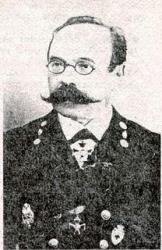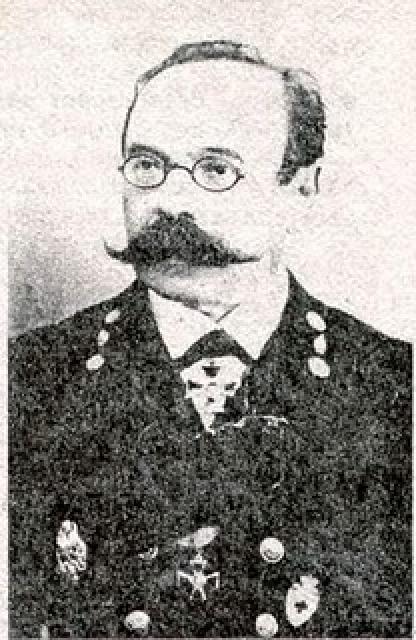
Caesar Belilovsky
 Ukraine
- Keisar Aleksandrovych Belilovsky: Ukrainian Poet and Translator
- Emigration and Revolutionary Activities
- Medical Career and Exile
- Crimean Years and Medical Contributions
- Literary Career
- Poetic Themes and Legacy
Keisar Aleksandrovych Belilovsky: Ukrainian Poet and Translator
Early Life and EducationKeisar Aleksandrovych Belilovsky was born into a Jewish hospital's feldsher's family. Residing in Poltava, he faced suspicions of political disloyalty and was under covert surveillance. In 1879, he enrolled in the medical faculty of the University of Dorpat.
Emigration and Revolutionary Activities
In 1881, Belilovsky left for the Continent. Upon his arrival in Vienna, he joined socialist-revolutionary circles and the Ukrainophile revolutionary party. In 1883, he graduated from the University of Jena with a doctorate in medicine.
Medical Career and Exile
Upon returning to Russia, Belilovsky became a city physician in Petropavlovsk. He moved to St. Petersburg in 1892. Assigned to Courland in 1889 as assistant physician-inspector, he was implicated in revolutionary activities in 1905 and banished from the province.
Crimean Years and Medical Contributions
After extensive travels throughout Russia, Belilovsky settled in Crimea in 1913, serving as chief quarantine physician in Feodosia. In the same year, he discovered a mineral water source named "Kafa" ("Narsan of Crimea"). Post-1920, Belilovsky worked in the Crimean Revolutionary Committee's health department and later served as a diplomat in Persia from 1925 to 1932.
Literary Career
Belilovsky published his first work, a German translation of Taras Shevchenko's poem "Why Do I Have Black Eyebrows?" in 1876. He became involved with the academic student society "Sich" in Vienna, which produced the "Slavic Almanac," where he published his poetry.
He was an early supporter of Ivan Franko. In 1882, he penned an article praising Franko's Ukrainian translation of Goethe's "Faust." Belilovsky collaborated with the magazine "Svit" and published "Northern Song" and "Dream" within its pages.
Belilovsky's anthologies "Sкладка" featured Franko's poetry for the first time in Russia. As a translator, he introduced Schiller, Goethe, and Heine to Ukrainian readers, releasing two volumes of Schiller's "Poetry" in 1914. In 1915, he published "Galicia, Its Past and Present."
Poetic Themes and Legacy
Belilovsky's poetry explores themes of patriotism, nostalgia, and love. Notably, he was among the first to draw inspiration from Eastern folklore, particularly in works such as "Persian Motifs" and his series of poems on Kazakh folklore.