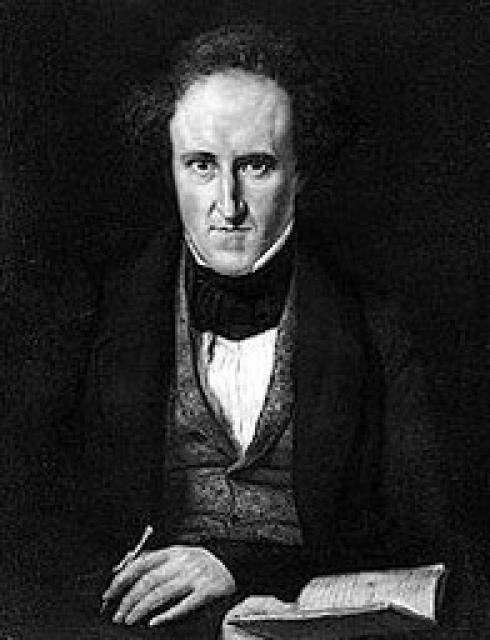
Carl Jonas Love Almqvist
 Sweden
- Carl Jonas Love Almqvist: A Swedish Literary Legend
- Early Life and Career
- Controversy and Literary Pursuits
- Literary Genius
- Literary Legacy
- Exile and Later Life
Carl Jonas Love Almqvist: A Swedish Literary Legend
Born in Stockholm, Sweden, on November 28, 1793, Carl Jonas Love Almqvist made a significant mark on Swedish literature.
Early Life and Career
Almqvist abandoned his career in public service early and retreated to the depths of the Värmland forests, embracing the rustic lifestyle of peasants. However, this seclusion proved unfulfilling, and he returned to Stockholm, becoming a rector and entering the clergy in 1837.
Controversy and Literary Pursuits
Almqvist's freethinking views on religion and politics drew criticism from authorities, leading to a trial by the Consistory Court. Despite being acquitted, he dedicated himself fully to literature, serving as a contributor and later co-editor of the newspaper "Aftonbladet."
Literary Genius
Characterized by his sharp wit and boundless imagination, Almqvist's writing spanned various genres. He authored textbooks and manuals on mathematics, geography, and linguistics, explored philosophy and political economy in treatises, and crafted imaginative works of fiction.
Literary Legacy
Among his notable works is "Törnrosens Bok," a collection of diverse romantic tales. His novels include "Gabriel Mimanso," "Amorini," "Amalia Hillner," and "The Lords of Ekeby." He also penned dramatic works such as "The Swan Grotto on Ipsara," and epic poems like "Shems-El-Nihar" and "Arthur's Hunt."
Exile and Later Life
In 1851, Almqvist found himself embroiled in an attempted poisoning case. Fearing prosecution, he fled to America. Upon returning from the New World in 1866, he lived in Bremen, Germany, under the alias E. Westermann, passing away there on September 26, 1866.


