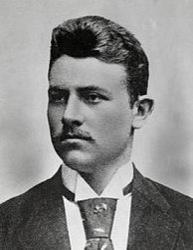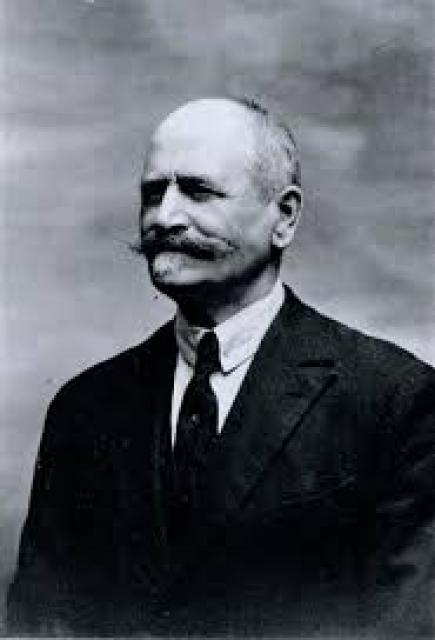
Carl Koefoed
 Denmark
- Early Life and Education
- Agricultural Training
- Move to Russia
- Expertise in Rural Credit
- Research on Land Redistribution
- Involvement in Land Reform
- Methodical Approach
- Advocacy and Public Engagement
- European Study Tour
- Role in Stolypin's Reforms
- Support from Stolypin
- Accomplishments
- Post-Revolutionary Activities
- Return to Denmark and Later Career
- Departure from Russia
- Continued Research and Legacy
Early Life and Education
Born on October 16, 1855, in Skanderborg, Denmark, Carl Andreas Kofod was raised in a large family. Despite his passion for agriculture, he became a pharmacist upon completing secondary school. Although he excelled in exams, he often lacked enthusiasm for coursework.
Agricultural Training
After working in his father's estate for 18 months, Kofod pursued agricultural studies at the Veterinary and Agricultural Academy in Copenhagen, graduating in 1875. He then worked as an assistant manager for two years, performing rudimentary agricultural tasks.
Move to Russia
In 1878, Kofod came to Russia, where he quickly mastered the language. He wrote all his subsequent agricultural books in Russian. From 1880 to 1886, he managed an estate. He married a Russian woman in 1887 and worked as an assessor in the Land Credit Society from 1887 to 1889 and the Nobles' Land Bank from 1889 to 1905.
Expertise in Rural Credit
Kofod gained a reputation as an expert in resolving difficult cases, leading to his transfer to the remote Caucasus branch of the Nobles' Land Bank. Through his extensive travels, he developed a profound understanding of the region and its people. His observations on the customs and beliefs of Armenians, Georgians, Tatars, and other ethnic groups were highly regarded.
Research on Land Redistribution
In 1901, Kofod was assigned to Mogilev, where he studied the self-organized land redistribution practices of local peasants. Observing the benefits of individual farming methods, he formulated a methodology for analyzing these practices.
Involvement in Land Reform
As the agrarian issue intensified in Russia, Kofod's research gained attention. In 1904, he presented his findings on land redistribution to the Imperial Geographical Society. With the support of Finance Minister S. Y. Witte and his assistant, A. A. Rittich, Kofod was commissioned to focus on his research efforts.
Methodical Approach
Kofod developed a rigorous method for studying land redistribution practices, documenting village resolutions, identifying motivations, and assessing the impact on peasant life. He identified both proponents (e.g., the Zemsky Department) and opponents (e.g., wealthy peasants, Orthodox priests).
Advocacy and Public Engagement
Based on his research, Kofod devised a strategy to overcome resistance to redistribution. He organized peasant excursions to successful redistribution sites, using government funding. These excursions sparked significant interest.
European Study Tour
In 1905-1906, Kofod traveled to Western Europe to examine land redistribution programs. Upon his return, he forged a relationship with Prime Minister P. A. Stolypin. He also contributed to working groups that explained government reforms to the public.
Role in Stolypin's Reforms
Kofod believed that land redistribution required the gradual dissolution of peasant communes. He served as a technical supervisor for redistribution efforts, guiding the process and educating delegations. In 1907, he published a widely distributed pamphlet explaining the benefits of homesteading.
Support from Stolypin
Kofod enjoyed the support of Prime Minister Stolypin, who trusted his expertise. In 1912, he became a member of the Land Management Committee, and in 1915, he joined the Council of the Ministry of Agriculture.
Accomplishments
Under Kofod's supervision, one-fifth of all peasant lands were redistributed from 1906 to 1916. His efforts were hailed for their positive impact on rural productivity and social well-being.
Post-Revolutionary Activities
World War I and subsequent revolutions ended land redistribution in Russia. Kofod joined the Danish embassy in 1916 and assisted Austrian-Hungarian prisoners of war. He was detained in Siberia on espionage charges and later served as Danish Minister-Resident in Omsk.
Return to Denmark and Later Career
Kofod returned to Moscow in 1920 and became a Danish citizen. He served as an advisor to the Danish government on Baltic and Soviet affairs. In 1924, he returned to Moscow as an agricultural attaché.
Departure from Russia
Despite his advanced age, Kofod continued working until his recall in 1931 at the insistence of Soviet authorities. He had come to believe that there was no future for him in a collectivized agriculture system.
Continued Research and Legacy
After leaving government service, Kofod continued his research on land tenure and redistribution. He firmly believed it was a key to social stability.