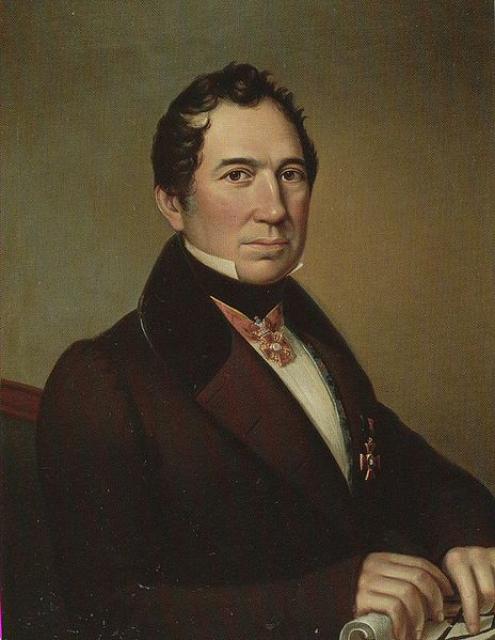
Carl Ludvig Engel
 Germany
- Carl Ludwig Engel: A Master Architect of Neoclassical Finland
- Early Life and Training
- Napoleonic Wars and Early Career
- Arrival in Finland and Helsinki Rebuilding
- Design of Senate Square and Surrounding Buildings
- Later Projects and Legacy
Carl Ludwig Engel: A Master Architect of Neoclassical Finland
German architect Carl Ludwig Engel left an enduring legacy on the architectural landscape of Finland, particularly in the capital city of Helsinki. His neoclassical designs shaped the city's iconic skyline and became a symbol of national identity.
Early Life and Training
Engel was born into a family of stonemasons in Charlottenburg, Berlin. His early exposure to the craft likely sparked his interest in architecture. He studied at the Berlin Institute of Architecture and later served in the Prussian building administration.
Napoleonic Wars and Early Career
The Napoleonic Wars disrupted Engel's career in Prussia, forcing him to seek work abroad. In 1808, he became the city architect of Tallinn, Estonia. However, opportunities for architects in the region were limited.
Arrival in Finland and Helsinki Rebuilding
From 1814 to 1815, Engel worked for a Finnish businessman, who introduced him to Johan Albrecht Ehrenström, the director of the Helsinki rebuilding project. Helsinki had recently become the capital of the Grand Duchy of Finland and was in need of a talented architect.
Design of Senate Square and Surrounding Buildings
Engel initially hesitated to take on the Helsinki project but eventually agreed. He arrived in 1816 and set to work on the centerpiece of the city: Senate Square. He designed the Helsinki Cathedral, Senate, library, and the main building of Helsinki University, creating an architectural ensemble that remains the heart of Helsinki to this day.
Later Projects and Legacy
Engel continued to oversee the rebuilding of Helsinki until his untimely death in 1840. He also designed other significant buildings in the city, including the Old Church, the Royal Palace, and the National Museum. His neoclassical style influenced Finnish architecture for decades, shaping the country's urban identity and contributing to its national pride.



