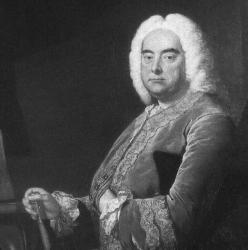
Carl Weber
 Germany
Biography of Carl Maria von Weber
Carl Maria von Weber was a German composer and the founder of German Romantic opera. He was born on November 18 or 19, 1786 in Eutin, which is now part of Schleswig-Holstein, Germany. His father, Baron Franz Anton von Weber, was a skilled violinist and the director of a traveling theater troupe. Growing up in a theatrical environment, Carl Maria learned music under the guidance of his stepbrother, who was a talented musician and had studied with Joseph Haydn. Later, Weber studied composition with Michael Haydn and Georg Vogler.

At a young age, Weber was drawn to opera, and in 1813 he became the director of the opera house in Prague, where he was one of the first to stage Beethoven's opera "Fidelio." In 1816, he was invited to lead the newly founded German Opera in Dresden. He gained European fame after the premiere of his opera "Der Freischütz" in Berlin in 1821. In the spring of 1826, Weber traveled to London to oversee the production of his new opera "Oberon," written for Covent Garden Theatre. However, the composer could not bear the hardships of the journey and died of tuberculosis in London on June 5, 1826.
Weber was a true Romantic artist, known for his versatility. While opera was the center of his attraction, he also composed exceptional instrumental music and achieved success as a concert pianist. Additionally, Weber displayed his talent as a music critic. At the age of 14, he mastered the lithographic printing technique, invented by Aloys Senefelder (1771–1834), and even improved upon it. According to Weber's letter to the Viennese publisher Artaria, this improvement allowed for "engraving notes on stone with a result that rivaled the best English copper engravings."
Weber's "Der Freischütz" is considered the first true Romantic opera. "Euryanthe" (1823) was an attempt to create a musical drama and had a significant influence on Wagner's "Lohengrin." However, by this time, Weber's declining health hindered him from fully accomplishing the challenges he set himself, and "Euryanthe" had only moderate success (though the overture to the opera became popular). The same can be said for "Oberon" (1826), which was based on Shakespeare's plays "The Tempest" and "A Midsummer Night's Dream." While the opera features enchanting music for the elves, beautiful depictions of nature, and captivating mermaid songs in the second act, only the inspired overture to "Oberon" is frequently performed today.
Among Weber's compositions in other genres, two piano concertos and a widely performed concert piece for piano and orchestra can be noted. He also composed four sonatas, several sets of variations, and the famous "Invitation to the Dance" for solo piano (later orchestrated by Hector Berlioz).