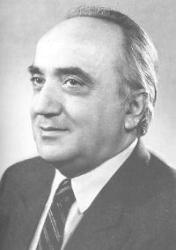
Charles Albert Gobat
 Switzerland
Biography of Charles Albert Gobat
Charles Albert Gobat was a Swiss political figure, lawyer, and writer. He was born in Tramelan, northwestern Switzerland, into a family of Protestant clergy. Gobat studied at the universities of Basel, Heidelberg, Bern, and Paris. In 1867, he successfully defended his doctoral dissertation in law at the University of Heidelberg. For the next 15 years, he dedicated himself to jurisprudence, combining teaching civil law at the University of Bern with private practice. He opened his own law office in the Canton of Bern, which became a leading legal firm in the district.
Political and Educational Career
In 1882, Gobat's focus shifted to politics and education. He was appointed as the trustee of the Bern Department of Public Education. During his 30-year tenure in this position, he implemented a series of progressive reforms. He transformed the primary education system by expanding the program to include the study of modern foreign languages. Gobat also expanded the existing classical education system by introducing vocational training courses for adults. Furthermore, he had a particular passion for history, gaining recognition and popularity through the publication of his research on "The Bern Republic and France in the Religious Wars" and his popular book "People's History of Switzerland."
At the same time, Gobat's political career thrived. In 1882, he was elected to the Great Council of Bern, the canton's legislative assembly. From 1886 to 1887, he served as the head of the cantonal government. From 1884 to 1890, he was a deputy in the Swiss Federal Council, and from 1890 until his death, he was a member of the National Council. In both politics and education, Gobat held liberal and moderate reformist views. His main achievement was the adoption of a law in Switzerland in 1902 that required the inclusion of a provision on international arbitration in all multilateral trade agreements to resolve disputes.
International Peace Efforts
Gobat's interest in international law and arbitration reflected his active involvement in the peace movement. In 1889, he was invited as an arbitration specialist to the first conference of the Inter-Parliamentary Union, founded a year earlier by Frédéric Passy and William Randal Cremer. This organization aimed to bring together parliamentarians from different countries to discuss global political issues and promote cooperation between nations through parliamentary and democratic institutions. During the fourth conference of the union in 1892, held in Bern, Gobat presided over the meeting. It was officially decided to establish the Inter-Parliamentary Bureau, the union's headquarters in Bern, with Gobat at its helm. For 17 years, he served as the bureau's secretary-general on a voluntary basis, coordinating the union's activities, preparing new conferences, editing the monthly publication "Inter-Parliamentary Conference," and writing the history of the International Bureau, among other responsibilities.
After the death of Élie Ducommun in 1906, Gobat took on the leadership of the International Peace Bureau, assuming duties that were quite similar to his role at the head of the Inter-Parliamentary Bureau. He passed away from a heart attack on March 16, 1914, in Bern, during a session of the International Peace Bureau.
Works
Gobat authored several works, including "Le Cauchemar de l'Europe" (The Nightmare of Europe) in 1911, "Développement du Bureau international permanent de la paix" (Development of the International Permanent Peace Bureau) in 1910, "Republique de Berne et la France pendant les guerres de religion" (The Republic of Bern and France during the Religious Wars) in 1891, and "L'Histoire de la Suisse racontée au peuple" (The History of Switzerland Told to the People) in 1900.