Charles Bertram
 Great Britain
- Charles Bertram: English Writer and Fraudster
- Author of 'De Situ Britanniae'
- Biography of Charles Bertram
- Forgery and Deception
- Legacy and Discovery
Charles Bertram: English Writer and Fraudster
Charles Bertram, a little-known English writer, gained notoriety as a fraudster when he claimed to have found a 14th-century manuscript written by an English Benedictine monk. In 1747, Bertram presented a copy of this incredible rarity, titled 'De Situ Britanniae', in London. The British scholarly community was captivated by the manuscript, which provided valuable insights into a long-forgotten era. The copy was entrusted to the Royal Society's library and served as a key reference for historians for over a century. Unbeknownst to all, the ancient manuscript was an elaborate forgery.
Author of 'De Situ Britanniae'
Charles Bertram's fraudulent masterpiece was the fictional historical work 'De Situ Britanniae' or 'Description of Britain,' which detailed the history of Roman Britain. He also attempted to fill gaps in the history of Scotland during the same period. However, Bertram remained relatively unknown as a writer, and his only notable work remained the counterfeit 'Description of Britain,' while his other books went unnoticed. The motives behind Bertram's forgery remain a mystery, as he never sought any personal gain from his deception. Throughout his life, his only claim to fame was supposedly discovering the "ancient manuscript" and sharing its contents with the public.
Biography of Charles Bertram
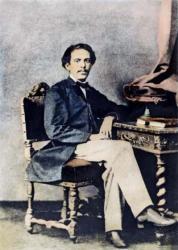
Charles Bertram was born in 1723. He was the son of an English silk dyer who had moved to Copenhagen with the entourage of Princess Louisa, the daughter of George II of Great Britain. Princess Louisa married the Crown Prince Frederick of Denmark in 1743, who later ascended the throne. Bertram's father established his own business and traded in stockings and other knitwear. Charles likely benefited from the warm reception that the Danes gave to Princess Louisa and her people. In 1747, Bertram successfully obtained admission to the University of Copenhagen, even though he belonged to the Anglican Church and should not have been granted entry. He managed to win the friendship of Hans Gram, the personal advisor and librarian to the Danish king, which played a role in the subsequent events. In 1748, Bertram petitioned the king to allow him to give lectures in the English language and became a professor of English at the Royal Naval Academy in Copenhagen.
Forgery and Deception
In 1746, Bertram wrote a letter to the renowned antiquarian William Stukeley, claiming to have gained access to an old manuscript written by a medieval English monk named Richard of Westminster. He asserted that the manuscript contained a wealth of information about Roman Britain. Stukeley, upon receiving a recommendation from Hans Gram, a respected and well-known figure beyond Denmark, viewed Bertram as trustworthy. Bertram then sent Stukeley a fragment of the manuscript on parchment, which the custodian of the Cotton Library confirmed to be at least 400 years old. Stukeley believed the manuscript to be genuine and trusted Bertram. In early 1749, at the age of 26, Bertram provided Stukeley with a copy of the manuscript and a map, which were deposited in the library of the Royal Society. Stukeley, who discovered that the 14th-century chronicler Richard of Cirencester was also a monk of Westminster Abbey, identified him as Richard of Westminster, as described by Bertram.
Legacy and Discovery
In 1765, Charles Bertram died as a respected but little-known author of several works. In Great Britain, the reception of 'De Situ Britanniae' was far from critical, and for many decades, no one suspected it to be a forgery. Although occasional doubts arose, they were attributed to the author-monk's lack of information. The first serious attempt to expose the fraud took place in 1845, and a quarter of a century later, it was conclusively determined that Bertram himself had written the "ancient manuscript." No one, except Bertram, had ever seen the original manuscript of 'De Situ Britanniae,' and the only evidence of its existence was Bertram's words. He always provided reasonable explanations for why the original document could not be seen and graciously supplied a copy instead.