Charles Cagniard de Latour
 France
- Biography of Charles Cagniard de la Tour
- Inventions and Contributions
- Discovery of the Critical Point
- Contribution to the Study of Fermentation
Biography of Charles Cagniard de la Tour
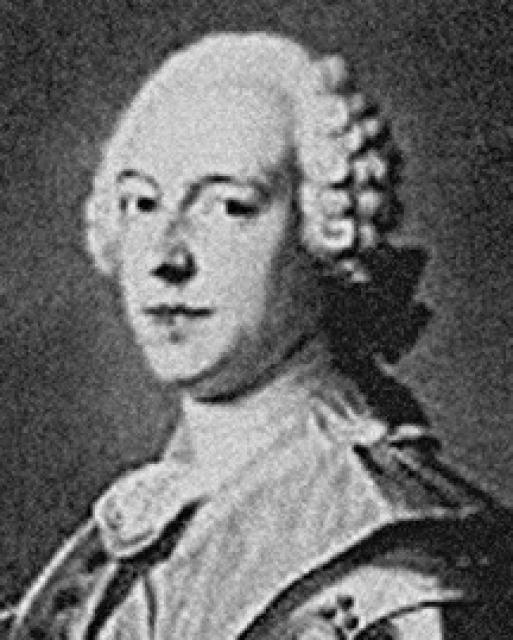
Charles Cagniard de la Tour was a French physicist, chemist, and mechanic. He was born in Paris and graduated from the Polytechnic School with a degree in cartography. In 1818, he was made a baron and he passed away in Paris.
Inventions and Contributions
Baron Charles Cagniard de la Tour was the author of numerous inventions. In 1809, he proposed a method for purifying gases using an Archimedean screw. In 1815, he developed a scheme for an air pump, also based on the Archimedean screw. The pump consisted of a screw submerged in a water tank, with its lower end fully immersed and its upper end partially submerged. The pump operated by rotating the screw in the opposite direction of the water's ascent.
Cagniard de la Tour also made significant contributions to the field of acoustics. In 1819, he invented a new type of siren, which now bears his name. The siren consisted of two disks with holes, and by rotating one disk relative to the other, the siren produced an incredibly powerful sound. He used the siren to determine the number of vibrations corresponding to a given sound level and studied the phenomenon of whistling and liquid vibrations.
In 1837, he, along with Demomferand, proposed the device known as an acoustic pyrometer. Cagniard de la Tour measured the air pressure in the lungs during conversation and based on the data obtained, he suggested a model for an artificial larynx. He also studied bird flight using an acoustic vibrator he had invented.
Discovery of the Critical Point
In 1822, Cagniard de la Tour discovered the existence of the critical point of a substance. He sealed a round stone in a cannon barrel filled with various liquids, such as alcohol, ether, gasoline, and water. By heating the barrel to different temperatures, he observed changes in the sound produced by the rolling stone. He found that there was a certain temperature limit above which the densities of the liquid and gas phases became equal, and the difference between them disappeared. As a result, a single phase called a supercritical fluid was formed. This temperature limit is now known as the Cagniard de la Tour point. In 1860, this temperature limit was rediscovered by Dmitry Mendeleev and named the temperature of absolute boiling for liquids.
Further progress in the study of this phenomenon occurred in 1869 after the experiments conducted by Thomas Andrews, who visually observed the critical state and determined that there was not only a temperature limit but also a pressure limit. Andrews introduced the terms "critical point" and "supercritical fluid."
Contribution to the Study of Fermentation
In 1838, Cagniard de la Tour experimentally proved that yeast, which carries out fermentation, is not simply a chemical substance but a living organism capable of growth and reproduction. He also demonstrated that the initial substances and reaction products are simple chemical compounds. However, his conclusions were initially rejected by prominent chemists such as Jöns Berzelius, Justus von Liebig, and Friedrich Wöhler.