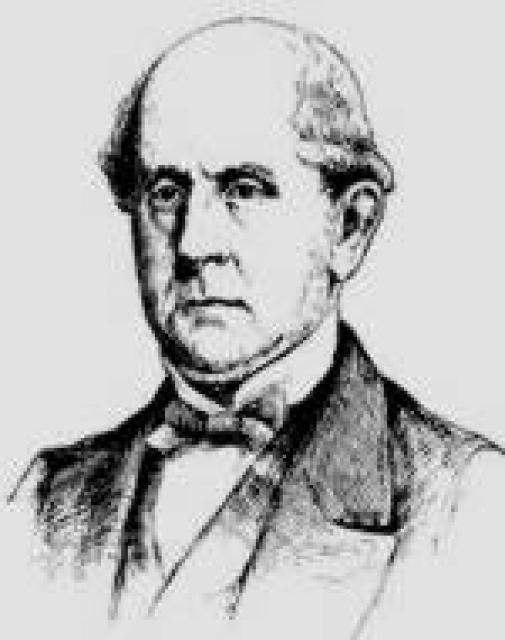
Charles Francis Adams
 USA
USA- Biography of Charles Francis Adams
- Education and Early Career
- Political Career
- Ambassador to the United Kingdom
- Later Life and Legacy
- Charles Francis Adams passed away in 1886.
Biography of Charles Francis Adams
Charles Francis Adams was born in 1807 in Boston, Massachusetts. He was the youngest and only surviving son of John Quincy Adams. At the age of two, Charles was taken to Europe for the first time. In St. Petersburg, he studied Russian, German, and French languages. When the Adams family moved to London, Charles was enrolled in a boarding school. In school, Adams often had to defend his father's and his country's honor by using his fists.
Education and Early Career
Upon returning to America, Charles Francis Adams attended the Boston Latin School, which he successfully completed. He then followed it with Harvard, graduating in the same year as his father's presidential inauguration - 1825. Two years later, under the guidance of Daniel Webster, he studied law. In 1828, Adams was permitted to practice law.
Political Career
In 1831, Adams was elected to the Massachusetts Legislature. He represented the Liberal Party but, like other Adamses, he was extremely independent in politics and felt the need to seek new paths for social development. In 1836, he broke ties with the liberals.
In 1848, the recently organized Free Soil Party, largely composed of Democrats, held a convention in Buffalo, electing Martin Van Buren as their presidential candidate and Charles Francis Adams as the vice-presidential candidate. However, the chances for the candidates were slim from the start, and six years later, this party was assimilated by the young Republican Party. In 1858, the Republicans of Massachusetts' 3rd District elected Adams to Congress, and he was reelected in 1860.
Ambassador to the United Kingdom
In the spring of 1861, President Lincoln appointed Adams as the envoy to London, a position previously held by his father and grandfather. It was a challenging time for an American diplomat in the UK. Despite having support and sympathy among the inhabitants of the industrial regions of England and Scotland, Lincoln's government could not find it with the British government, encountering either openly hostile or coldly indifferent attitudes. There were plenty of diplomatic issues to deal with, including the arrest of American officer Charles Wilkes of Confederate representatives James Mason and John Slidell aboard a British mail ship, construction of ships for the Confederate fleet in English yards, and British-French plans to recognize the independence of the new American republic. Adams now defended his country's honor with his pen as actively as he had previously defended it with his fists.
Later Life and Legacy
In 1868, Adams' tenure as ambassador came to an end, and he returned to the United States. In 1872, he planned to run for the Republican presidential candidacy but the convention chose Horace Greeley instead. In 1869, Adams was elected to the Board of Overseers of Harvard and served as its chairman for several years. He edited the works and memoirs of his father and grandfather, publishing them in 22 volumes, and prepared the publication of his own letters and speeches.


