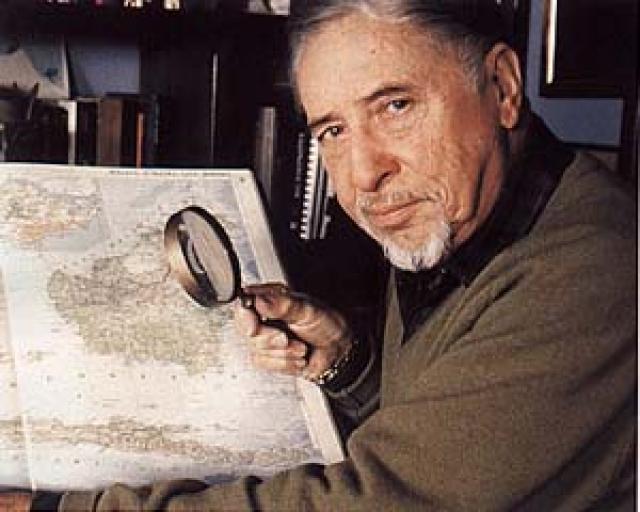
Bernard Heuvelmans
 France
Biography of Bernard Heuvelmans
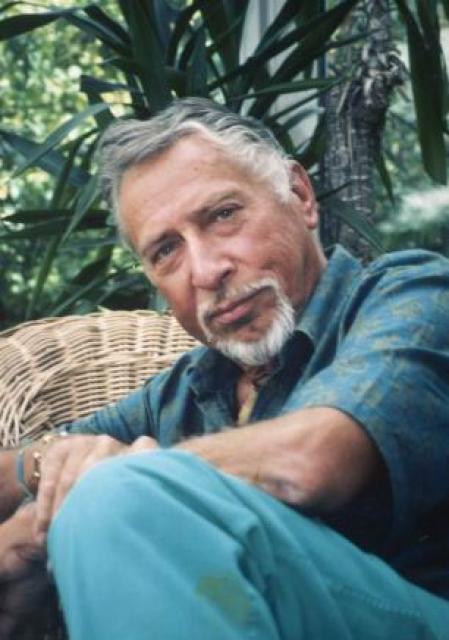
Bernard Heuvelmans was a Franco-Belgian zoologist, researcher, and writer, who is considered the 'father of cryptozoology'. He was born on October 10, 1916, in Le Havre, France, and grew up in Belgium. He earned his doctoral degree in zoology from the Free University of Brussels, which later split into the Université Libre de Bruxelles and Vrije Universiteit Brussel.
Heuvelmans was a student of Russian zoologist Serge Frechkop, who emigrated from Russia in the 1920s and was known for his theory of initial bipedalism, which posits that the first mammals were initially bipedal, meaning they moved on two legs. For his doctoral dissertation, Heuvelmans studied the dental structure of the anteater, which had posed classification difficulties for zoologists.
Although Heuvelmans had been interested in zoological oddities from the beginning of his academic career, he credited an article by Ivan Terence Sanderson titled 'There Could be Dinosaurs', published in 1948 in the 'Saturday Evening Post', as the source of his interest in unknown animals. Sanderson discussed the possibility of the existence of dinosaurs in remote corners of the world.
Heuvelmans conducted extensive research and wrote the book 'On the Track of Unknown Animals', published in 1955 in French as 'Sur la Piste des Bêtes Ignorées', which is often regarded as one of the best and most authoritative works on cryptozoology. After its publication, Heuvelmans authored numerous other books and articles, some of which were translated into foreign languages. While his works were popular with the general public and sold well, they received little attention from scientists and expert zoologists.
His book 'In the Wake of the Sea-Serpents', published in the United States in 1968, became the second book translated into English. It discusses sea serpents and giant squids. As Heuvelmans continued his research, he realized the need to give a name to this entirely new discipline within zoology. Thus, the term cryptozoology, 'the study of hidden animals', was coined, although mainstream zoology often considers it a pseudoscience.
In the late 1960s, Heuvelmans contributed to the spread of rumors about the Minnesota Iceman, which was exhibited as an attraction at traveling fairs. Heuvelmans believed the creature could be genuine and published a work on the subject, in which he named the creature a new species called Homo pongoides. However, he was unable to examine the frozen specimen, and it soon disappeared without a trace.
In 1975, Heuvelmans founded the Center for Cryptozoology in France, where his library is housed. He also helped establish the International Society of Cryptozoology in 1982 and served as its first president. He was also the first president of the organization 'Centre for Fortean Zoology'.
In 1999, he donated over 50,000 documents, photographs, and specimens to the Museum of Zoology in Lausanne, Switzerland.
Bernard Heuvelmans passed away on August 22, 2001, at the age of 84, in Le Vésinet, France. He was survived by his wife, Monique Watteau, a Belgian writer, artist, and illustrator, who often accompanied him on his exotic travels.