Charles Plumie
 France
Biography of Charles Plumier
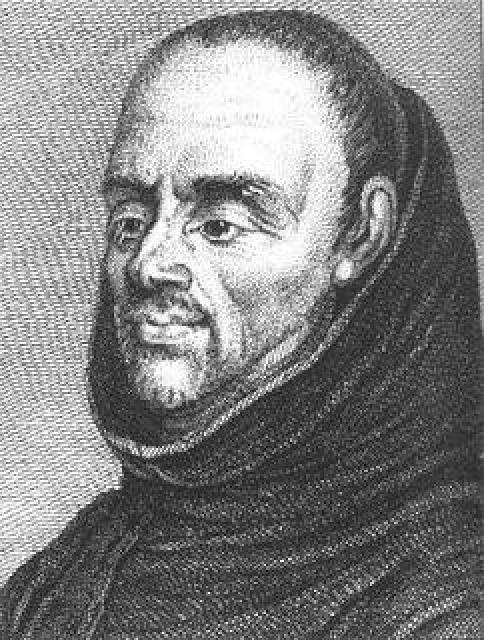
Charles Plumier (April 20, 1646 – November 20, 1704) was a French botanist. He was born in Marseille and entered the Franciscan order at the age of sixteen. Plumier dedicated himself to the study of mathematics and physics, while also producing physical instruments. He was an excellent draftsman, painter, and turner.
Botanical Studies
While sent to the Trinitarian monastery in Rome, Plumier studied botany. Upon returning to France, he became a student of Joseph Pitton de Tournefort and went on several expeditions with him. Plumier brought back specimens of new plants from South America. He discovered the Magnolia (Magnolia L.) which was named in honor of the French botanist Pierre Magnol, as well as the Begonia (Begonia L.) which was named after his patron, Michel Begon.
Exploration in France and the French Antilles
Plumier also explored the southern coast of France, particularly Provence and Languedoc. In 1689, as part of a government expedition, he traveled to the French Antilles. The results of this expedition were highly valuable, and Plumier was appointed as the royal botanist. In 1693, on the orders of King Louis XIV, he embarked on a second journey to the French Antilles and Central America. A Dominican monk and botanist named Jean-Baptiste Labat accompanied him on his trip to the West Indies. Plumier passed away in 1704 in Puerto de Santa Maria, near Cadiz, while preparing for his fourth expedition to Peru.
Works
Plumier's works include "Description des plantes de l'Amérique" (Description of American Plants), published in Paris in 1693, in folio format. He also wrote "Traité des fougères de l'Amérique" (Treatise on American Ferns), published in Paris in 1705, in folio format. Plumier's other works include "Nova plantarum americanarum genera" (New Genera of American Plants), published in Paris between 1703 and 1704. He also wrote "L'Art de tourner ou de faire en perfection toutes sortes d'ouvrages au tour" (The Art of Turning or Perfecting All Kinds of Work on a Lathe), published in Lyon in 1701. Additionally, Plumier's collection of manuscripts and drawings are preserved in the National Library and the Museum of Natural History in Paris.