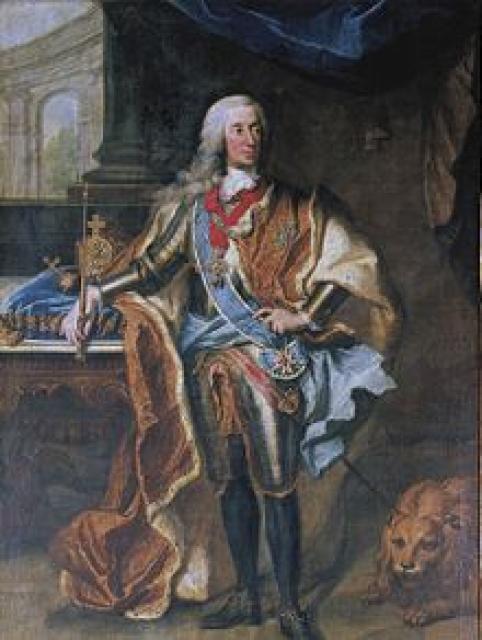
Charles VII Albrecht
 Belgium
- Early Life and Imperial Claims
- Role in the War of Austrian Succession
- Alliances and Wars
- Return to Bavaria and Death
- Family and Legacy
Charles VII, Holy Roman Emperor: A Bavarian Dynasty and Imperial Ambitions
Early Life and Imperial Claims
Charles VII was born in Munich on August 6, 1697, the son of Maximilian II Emmanuel, Elector of Bavaria, and Theresa Kunigunda Sobieska, granddaughter of Polish King John III Sobieski. In 1726, he became Elector of Bavaria as Charles Albert.
Role in the War of Austrian Succession
Upon the death of Emperor Charles VI in 1740, Charles VII asserted his claim to the Austrian inheritance, allying with France and Spain. In 1741, he led French and Bavarian forces into Upper Austria and occupied Prague, declaring himself King of Bohemia.
On January 24, 1742, Charles VII was elected Holy Roman Emperor. However, Austrian forces counterattacked, recapturing Prague and occupying Bavaria. Despite victories by Charles's general, Seckendorff, he was forced to retreat from Munich in 1743.
Alliances and Wars
To strengthen his position, Charles VII allied with Frederick II of Prussia in the Second Silesian War. The Austrian forces were compelled to leave Bavaria, but Charles's return to Munich proved short-lived as the Austrians invaded again.
The Battle of Dettingen in 1743, in which Charles's French allies were defeated by British forces under King George II, weakened his cause. However, the alliance with Prussia kept him in the war.
Return to Bavaria and Death
In 1744, Charles VII returned to Munich, but his health had deteriorated. He died on January 20, 1745, a mere three months after his arrival. Despite his firm belief in his right to Austria, he lacked the drive and energy to secure it.
Family and Legacy
In 1722, Charles VII married Maria Amalia of Austria, daughter of Emperor Joseph I. They had seven children, including Maximilian III Joseph, who succeeded as Elector of Bavaria.
His death led to the Treaty of Füssen (1745), which recognized Maria Theresa's claim to the Austrian territories while preserving Bavarian independence. Charles VII's reign was marked by his ambitious imperial claims, the complexities of the War of Austrian Succession, and his untimely demise.