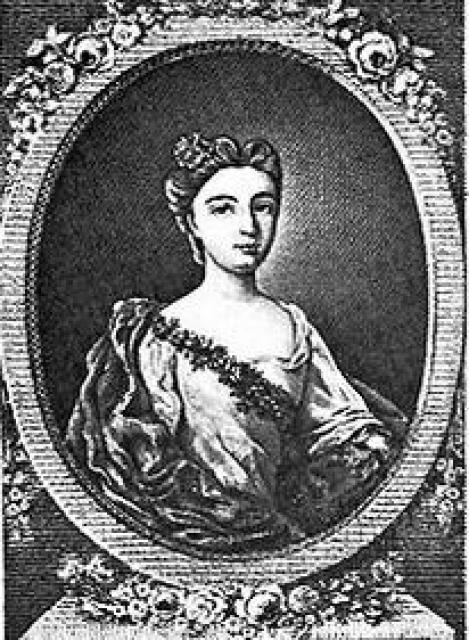
Charlotte Aisse
 France
- Aïssé: An Extraordinary Life from the Caucasus to Versailles
- From Istanbul to France
- A Rising Star in Parisian Society
- A Tragic Love
- Friendship and Correspondence with Madame Calandrini
- A Premature End
Aïssé: An Extraordinary Life from the Caucasus to Versailles
Early Life and Uncertain OriginsAïssé, a French writer of Circassian descent, was known primarily for her published correspondence with Madame Calandrini. Her origins remain shrouded in mystery. According to her own account, she was the daughter of a Circassian prince whose palace was raided by Turkish forces, resulting in her capture and enslavement.
From Istanbul to France
In 1698, at the tender age of four or five, Aïssé was purchased by Charles de Ferriol, the French ambassador to the Ottoman Empire. He brought her to France, where she received an exceptional education in the household of his brother's wife. Her original Circassian name, Ha'dé, was changed to the more melodic "Aïssé," which she adopted as her surname. Upon her baptism, she was given the Christian names Charlotte-Élizabeth.
A Rising Star in Parisian Society
From a young age, Aïssé captivated the Parisian elite with her exotic background, striking beauty, and charming demeanor. She became romantically involved with the Chevalier Blaise-Marie d'Aydie, a relationship that bore a daughter in 1721. Rumors also circulated about the affection of the Regent, Philippe d'Orléans, towards her.
A Tragic Love
Aïssé's aspirations for marriage faced an insurmountable obstacle: D'Aydie, a Knight of Malta, was bound by vows of celibacy. This imposed a profound sadness on their relationship, casting a shadow over her love life.
Friendship and Correspondence with Madame Calandrini
In 1726, Aïssé crossed paths with Madame Julie Calandrini, the wife of a wealthy Genevan citizen. They struck up a deep friendship that lasted for seven years. Their correspondence, published as "Letters to Madame Calandrini," provides a glimpse into Aïssé's daily life, her critiques of societal mores, and her search for moral guidance.
A Premature End
Tragedy struck in 1733, when Aïssé succumbed to consumption (tuberculosis). Her untimely death brought a premature end to the extraordinary life of a woman who had journeyed from the Caucasus to the heart of French high society, leaving behind a legacy of captivating stories and thought-provoking writings.


