Chekko Pietro
 Italy
Italy- Cecco di Pietro: An Italian Master of the 14th Century
- Early Influences and Collaborative Endeavors
- Administrative and Artistic Accomplishments
- Artistic Development under the Guidance of Francesco Traini
- Prolific Portrayals of the Madonna and Child
- Monumental Masterpieces and Legacy
Cecco di Pietro: An Italian Master of the 14th Century
Cecco di Pietro, an esteemed Italian painter, dedicated his career to the artistic realm of Pisa and its neighboring territories in the latter half of the 14th century. With an impressive collection of signed and attributed works, he held a prominent position within the Pisan artistic landscape.
Early Influences and Collaborative Endeavors
In 1371, Cecco di Pietro embarked on a significant project at the illustrious Camposanto, where he diligently restored frescoes depicting the life of Job alongside renowned Florentine artist Francesco di Neri da Volterra. The Camposanto, adorned with masterworks by the likes of Francesco Traini, Taddeo Gaddi, and Taddeo di Bartolo, served as a formative crucible for Cecco's artistic style.
Administrative and Artistic Accomplishments
Beyond his artistic pursuits, Cecco di Pietro assumed the role of "anziano del popolo" (alderman) of Pisa in 1380, highlighting his prominence within the city's civic life. In 1385, he created an esteemed banner for the Pisan cathedral.
Artistic Development under the Guidance of Francesco Traini
The artistic influences of Francesco Traini, who adeptly incorporated Sienese painting techniques into his work, greatly shaped Cecco di Pietro's development. Traini's influence is particularly evident in Cecco's earliest known signed work, the "Bandinella" of 1374, and his poignant painting "Lamentation of Christ with Saints" (1377).
Prolific Portrayals of the Madonna and Child
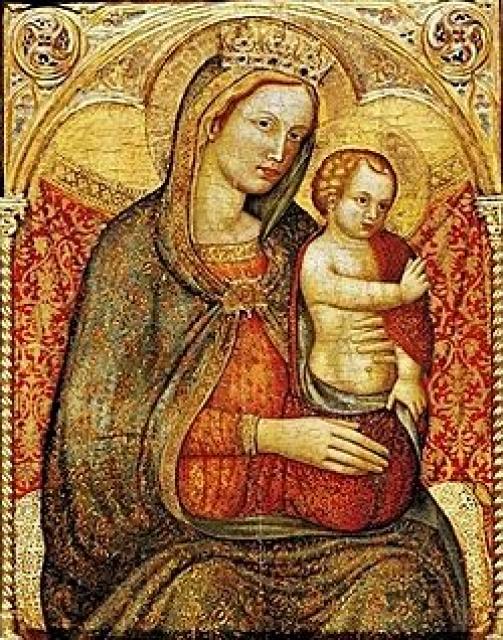
Throughout the 1370s and 1380s, Cecco di Pietro produced numerous depictions of the "Madonna and Child." These works typically feature the Madonna seated on a throne, with variations in the positioning of the infant Christ and the occasional presence of donors at her feet.
Monumental Masterpieces and Legacy
In 1386, Cecco di Pietro garnered acclaim for his "Polyptych with Crucifixion," a significant altarpiece that showcased his artistic prowess. His crowning achievement was the grand "Polyptych di Agnano" (1386-95), commissioned by Archbishop Moricotti and now housed in the collection of the Cassa di Risparmio di Pisa. Despite the local nature of his art, Cecco di Pietro's eclectic style left no lasting legacy. Nonetheless, his contributions to the vibrant artistic scene of Pisa remain a testament to his talent and the rich artistic heritage of the city.




