Christopher Smart
 Great Britain
Biography of Christopher Smart
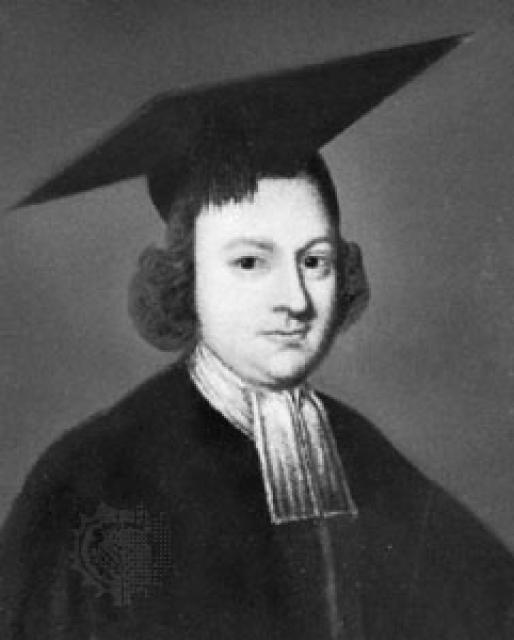
Christopher Smart, an English poet, was born in the village of Shipbourne in Kent. He studied at the University of Cambridge, where he gained recognition for his Latin verses and translations of ancient authors. Smart received numerous awards for his poetry competitions during his time at the university. After graduating, he held various teaching and administrative positions at Cambridge.
However, Smart led a disorderly lifestyle and found himself in debt. In 1747, he was briefly arrested at the request of his creditors. In 1752, Smart moved to London, where he collaborated with newspapers and journals, tried his hand at comedy drama, and published a book of prose translations of Horace in 1756.
Around 1751, Smart experienced a mental breakdown, which eventually developed into religious obsession. According to his contemporaries, he constantly prayed aloud, fell to his knees, and raised his hands to the sky in public places, demanding that others follow his example. After numerous complaints, Smart was admitted to St. Luke's Hospital in London, a mental asylum, where he stayed with short breaks from 1756 to 1763.
Samuel Johnson, a close friend and patron of Smart, visited the poet during his confinement and repeatedly demanded his release. Johnson famously said, "It is not madness to pray, but it would be madness not to pray as Christopher Smart did." While in the asylum, Smart created works that brought him posthumous fame, including the poems "Song to David" and "Rejoice in the Lamb."
After his release, Smart lived in great need. In 1770, he was arrested again for debt and died in poverty and obscurity.
Smart's poetry was rediscovered by Robert Browning, who made great efforts to popularize it and simultaneously created a romantic legend about Smart as a "genius madman." Dante Gabriel Rossetti called "Song to David" the "most perfect poem written in the English language in the 18th century." In the 20th century, Smart's poems, highly praised by W.B. Yeats, became part of the golden treasury of English poetry. His poem "Rejoice in the Lamb" served as the basis for Benjamin Britten's cantata of the same name in 1943.
Smart's extensive poetic legacy primarily consists of religious and satirical verses. His most famous work is "Song to David," written around 1763. In this poem, praise of the biblical king-poet David transcends into a profound hymn to God and the created world, where everything is worthy of singing and praising. The poet himself becomes a new Adam, full of reverence before the beauty of creation.
The poem "Jubilate Agno" has been preserved in fragments, with the entire work only published in 1954. In this poem, Smart refers to himself as the "chronicler of God, the evangelist writer," and seeks to provide a poetic description of all things existing in the world. The most well-known excerpt is dedicated to Smart's cat named Jeoffry, where the author, in a sublime style reminiscent of divine worship, enumerates the cat's virtues.
In Russia, Smart's name remained completely unknown until the beginning of the 21st century. However, with the appearance of translations by E.V. Vitkovsky ("Song to David," 2001) and G.M. Kruzhkov (selected fragments of Jubilate Agno, 2002), his position has changed.