Claude Carra-Saint-Cy
 France
- Early Life and Military Service
- Revolutionary and Napoleonic Wars
- Napoleonic Campaigns
- Later Career and Legacy
Early Life and Military Service
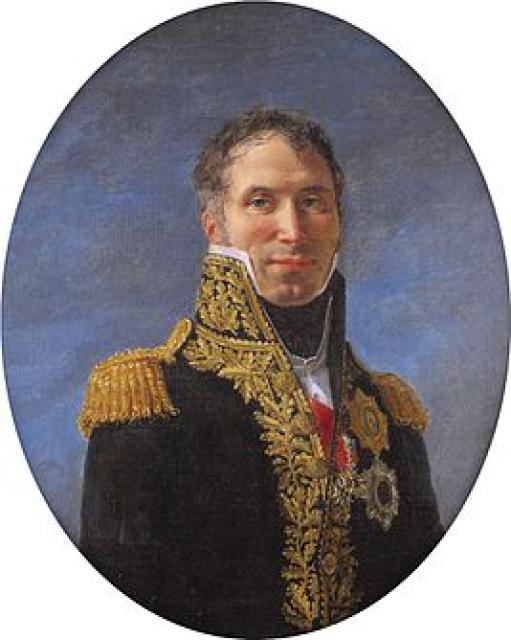
Claude Carra Saint-Cyrwas born on December 17, 1756, in Tolon, France, to a groom. Seeking to enlist in the military before reaching the age requirement, his family registered him in the Bourbonnais infantry regiment under the name of Jean Francois, who was born on December 27, 1756, and was a brother who had died in infancy.
In 1774, Carra Saint-Cyr joined his regiment and embarked for North America, where he fought in the American Revolutionary War. He rose to the rank of lieutenant before returning to France in 1784. He served in various staff positions for the next several years and retired from the army in March 1792 due to health issues.
Revolutionary and Napoleonic Wars
In 1793, France found itself in need of soldiers, and Carra Saint-Cyr rejoined the army, serving as an adjutant to General Aubert-Dubayet and participating in operations against the royalists in the Vendée.
In 1796, he was recalled to Paris and served in the War Ministry before being sent on a diplomatic mission to Turkey. He became consul-general in Wallachia and later chargé d'affaires in Turkey after the death of Aubert-Dubayet.
In 1799, Carra Saint-Cyr returned to France and joined the Italian Army, where he was wounded in battle and later married Aubert-Dubayet's widow. He commanded a brigade and distinguished himself at the Battle of Marengo.
Napoleonic Campaigns
In 1803, Carra Saint-Cyr was promoted to divisional general and commanded French troops in the Neapolitan Kingdom. He played a significant role in the 1805 campaign, defending the coast of Gravelines and capturing 5,000 Austrian prisoners.
He subsequently fought in the Polish campaign of 1807 and the Austrian campaign of 1809, distinguishing himself at the battles of Aspern and Wagram.
Later Career and Legacy
In 1810, Carra Saint-Cyr became governor of Hamburg and commander of the 32nd military district. He suppressed a rebellion in Hamburg and was forced to evacuate the city in 1813 when a Russian-German force approached.
After the return of the Bourbons, he was appointed governor of Guiana but returned to France in 1815 after Napoleon's escape from Elba. He did not actively participate in the Hundred Days and remained as governor of Guiana until 1819. He retired from the army in 1824.
Carra Saint-Cyr's name is inscribed on the Arc de Triomphe in Paris. He was a skilled and courageous general who played a vital role in France's military victories during the revolutionary and Napoleonic wars.