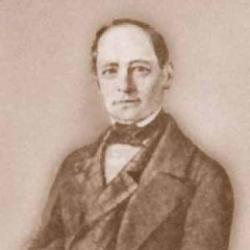
Claude Shannon
 USA
USA- Biography of Claude Shannon
- Early Interests and Education
- Contributions and Career
- Personal Life and Legacy
Biography of Claude Shannon
Claude Elwood Shannon was an American mathematician, electrical engineer, and cryptography expert, renowned as the creator of information theory. He was born on April 30, 1916, in Petoskey, Michigan, and grew up in Gaylord, Michigan. His father, a self-made man and descendant of the early settlers of New Jersey, was a businessman and judge, while his mother was an English teacher and a former principal of the local school in Gaylord.

Early Interests and Education
From an early age, Shannon was fascinated by the natural sciences and mathematics. He spent his free time constructing mechanical and electrical models and even built a wireless telegraph that connected his home to his friend's home half a mile away. As a teenager, he worked as a courier for Western Union. Thomas Edison, whom Shannon later discovered was a distant relative, was his childhood hero. Shannon's interests did not extend to politics, and he identified as an atheist.

In 1932, Shannon enrolled as a student at the University of Michigan, where he was introduced to the intricacies of Boolean algebra. He graduated in 1936 with bachelor's degrees in mathematics and electrical engineering. He continued his studies at the Massachusetts Institute of Technology (MIT), where he worked on one of the first analog computers, Vannevar Bush's differential analyzer. It was during this time that Shannon realized the potential applications of Boolean algebra concepts.

Contributions and Career
Shannon's master's thesis, titled "Symbolic Analysis of Relays and Switching Circuits," is considered one of the most important master's theses of the 20th century. In the thesis, he demonstrated that the application of Boolean algebra in electronics could construct and solve any logical and numerical relationship. His groundbreaking work earned him the American Institute of Electrical Engineers' award in 1940.

During World War II, Shannon made significant contributions to the field of cryptanalysis, working on defense projects and developing codes and secure telecommunications systems. In 1948, he published a groundbreaking paper that laid the foundation for information theory.
Shannon joined Bell Labs in 1941, where he worked alongside his future wife, Betty Shannon, who was a numerical analyst. They married in 1949. Shannon taught and conducted research at the University of Michigan and Bell Labs until 1956, when he returned to MIT as a professor. He remained at MIT for 22 years.
Personal Life and Legacy
Besides his academic pursuits, Shannon had numerous hobbies, including juggling, unicycling, and chess. He also invented various amusing devices, such as rocket-powered flying discs and a motorized jumping insect with a flame-spewing tube, which he showcased in scientific exhibitions. Together with Edward O. Thorp, Shannon is credited with inventing the first wearable computer, which they used to gain an advantage in roulette and had successful runs in Las Vegas.
In his later years, Shannon battled Alzheimer's disease and spent his last days in a nursing home. He passed away on February 24, 2001, leaving behind a remarkable legacy in mathematics, electrical engineering, and cryptography.