
Agner Erlang
 Denmark
Biography of Agner Erlang
Agner Krarup Erlang, a Danish mathematician, statistician, and engineer, was the founder of the theory of queuing and the study of traffic in telecommunication systems. Born on January 1, 1878, in Lønborg, Jutland, Erlang was the son of a school teacher and a descendant of Thomas Fincke, a Danish mathematician and physicist, on his mother's side.
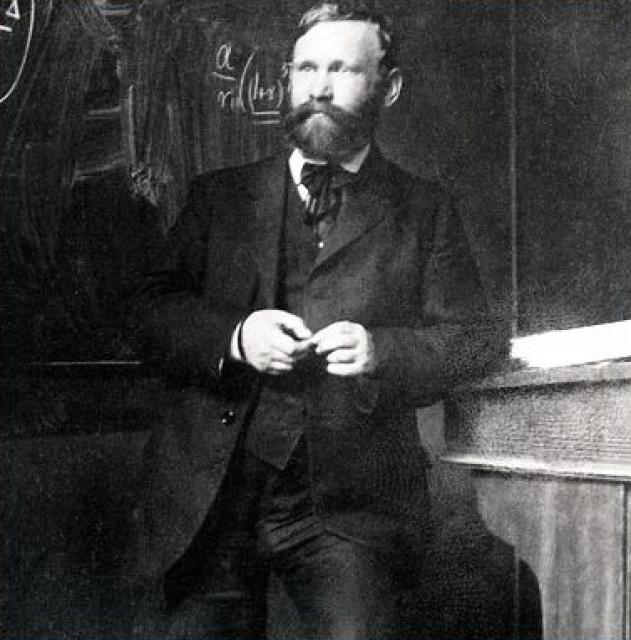
Education and Early Career
After being supported by a relative, Erlang passed his entrance exams with distinction and enrolled at the University of Copenhagen in 1896. He received a scholarship and chose mathematics as his main discipline, while also studying astronomy, physics, and chemistry. Erlang graduated from the university in 1901 with a master's degree.
For the next seven years, Erlang worked as a teacher in several schools. During this time, he became a member of the Association of Danish Mathematicians (TBMI), which allowed him to meet Johan Jensen, a self-taught mathematician and the chief engineer of the Copenhagen Telephone Company (KTAS), a subsidiary of the International Bell Telephone Company.
Career at KTAS
In 1908, Erlang joined KTAS and worked there for almost twenty years. He was involved in resolving the classical problem of determining the number of circuits required to ensure acceptable telephone communication. However, Erlang went further in his thinking and began to calculate how many telephone operators were needed to handle specific call volumes. This led to the utilization of live operators and switched telephone networks in most telephone exchanges.
Driven by necessity, Erlang became a practical researcher. He personally conducted measurements and was willing to descend into manholes on the streets to take readings. He was also an expert in the history and calculation of mathematical functions, particularly logarithms. Erlang developed new calculation methods for certain table forms, contributing to the field of mathematics.
Contributions to Telecommunication
Erlang spent several years developing his theory of telephone traffic. His notable works include "The Theory of Probabilities and Telephone Conversations" in 1909, where he proved that the Poisson distribution is used for random telephone traffic. In another work, "Solution of some Problems in the Theory of Probabilities of Significance in Automatic Telephone Exchanges" in 1917, he presented classical formulas for call blocking probability and waiting time.
These and other significant works by Erlang were translated into English, French, and German. His formulas became widely adopted worldwide and were used by the British Post Office. The unit of traffic intensity, primarily in telephony, was named the erlang (symbol: Erl). For example, if a conversation between two subscribers lasted for one hour, one voice channel was occupied, creating a load of one erlang on the telecommunication equipment.


