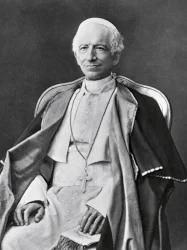
Clement IV
Clement IV was pope from 1265 to 1268, during a decisive struggle over control of southern Italy. Born Gui Foulques in France, he had worked as a lawyer and royal adviser before entering the church. As pope, he backed Charles of Anjou’s claim to Sicily against the Hohenstaufen dynasty, a policy that changed the political balance in Italy and shaped the end of his pontificate.
From lawyer to churchman
Gui Foulques was born around the turn of the thirteenth century at Saint-Gilles in southern France. He studied law and served as a legal adviser to French rulers. He was married and had children before his wife’s death led him to enter ecclesiastical life. He later became bishop of Le Puy, archbishop of Narbonne, and a cardinal.
After Pope Urban IV died in 1264, a lengthy conclave elected Foulques in February 1265. He chose the name Clement IV. The cardinals had been divided over how to confront Manfred, ruler of Sicily and a member of the Hohenstaufen family, which had long contested papal authority in Italy. Clement continued the policy of seeking a powerful ally from outside the peninsula.
Charles of Anjou and the struggle for Sicily
Clement invested Charles of Anjou, brother of King Louis IX of France, with the kingdom of Sicily. The papacy supported Charles’s campaign against Manfred, who was defeated and killed at the Battle of Benevento in 1266. The Angevins took control of the kingdom, though their rule remained contested.
In 1268, Conradin, the last major Hohenstaufen claimant, led an invasion to recover Sicily. Charles defeated his army at Tagliacozzo and captured Conradin, who was executed in Naples later that year. Clement died before the execution, but his support for Charles had helped bring the Hohenstaufen claim in Italy to an end. The decision secured an ally for the papacy while also increasing the influence of the French-led Angevin dynasty.
A pope at Viterbo
Clement spent much of his pontificate at Viterbo rather than Rome, where factional conflict made residence difficult. He governed through correspondence and diplomacy, balancing the papacy’s territorial interests against powerful rulers. He also encouraged intellectual work: in 1266 he asked the English scholar Roger Bacon to send him a major work, later known as the Opus Majus.
Clement died at Viterbo on November 29, 1268. The cardinals took nearly three years to elect his successor, reflecting the divisions his pontificate had faced. His legacy is closely tied to the intervention in Sicily, which strengthened Angevin power but also deepened the entanglement of the papacy in Italian dynastic warfare.