Clement XI
- Education and rise to the papacy
- A pope between rival powers
- Doctrine and the Chinese Rites controversy
- Scholarship and legacy
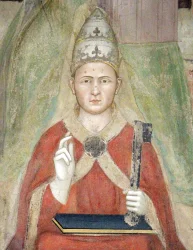
Clement XI, born Giovanni Francesco Albani, led the Catholic Church from 1700 to 1721. A highly educated churchman from Urbino, he brought a scholar’s interests and a diplomat’s caution to a papacy caught between Europe’s rival powers. His reign saw the War of the Spanish Succession, major disputes over doctrine and missionary practice, and efforts to strengthen the Vatican Library and preserve the Church’s intellectual heritage.
Education and rise to the papacy
Albani was born in Urbino on July 23, 1649, into a noble family with roots in central Italy. Sent to Rome as a boy, he studied at the Roman College, where he received a classical education and became known for his command of Latin and Greek. He entered papal service and held a series of administrative and diplomatic posts before Pope Alexander VIII made him a cardinal in 1690.
When Pope Innocent XII died in 1700, the conclave deliberated for more than six weeks amid pressure from the major Catholic powers. Albani was elected on November 23 and chose the name Clement XI. He initially hesitated, conscious of the burdens of the office, but accepted the election and became head of the Church and ruler of the Papal States.
A pope between rival powers
Clement’s pontificate began just as the Spanish Habsburg king Charles II was dying without an heir. The resulting War of the Spanish Succession pitted France and its allies against Austria and other European powers. Clement hoped to keep the Papal States neutral, but both sides demanded recognition and support. He initially recognized Philip V of Spain, the Bourbon claimant, then under military and diplomatic pressure acknowledged Archduke Charles of Austria as king of Spain in 1709. The shift angered Philip and exposed how little freedom the papacy had when armies occupied Italian territory.
The conflict left the pope politically isolated. At the 1713 Treaty of Utrecht, European powers redrew the map of Italy without regard for papal claims, transferring Sicily to Savoy and rearranging other former territories. Clement’s efforts to defend the temporal interests of the Papal States repeatedly collided with the ambitions of stronger monarchies.
Doctrine and the Chinese Rites controversy
Clement took a firm line in several major religious disputes. In 1713 his bull “Unigenitus” condemned 101 propositions associated with the French Jansenist theologian Pasquier Quesnel. The ruling intensified a controversy over grace, religious authority and the interpretation of Catholic doctrine, and remained divisive in France for decades.
He also intervened in the Chinese Rites controversy, a dispute over whether Chinese Catholic converts could continue Confucian and ancestral ceremonies. In 1715 the bull “Ex illa die” restricted those practices, taking a hard position in a long debate between missionaries over how Christianity should adapt to local customs. The decision had lasting consequences for Catholic missions in China and relations with the Qing court.
Scholarship and legacy
Despite political and religious conflict, Clement was a committed patron of scholarship. He supported the collection and cataloguing of Oriental manuscripts for the Vatican Library, including Syriac materials gathered in the Middle East by the scholar Giuseppe Simone Assemani. He also encouraged archaeological and antiquarian work and founded a public library in his native Urbino for local residents and students.
Clement XI died in Rome on March 19, 1721, after more than twenty years as pope. His legacy is complex: he promoted learning and strengthened important scholarly collections, yet his rigid doctrinal decisions produced long-running conflict. His pontificate also showed how the papacy navigated an age in which religious authority, dynastic politics and military power were tightly bound together.