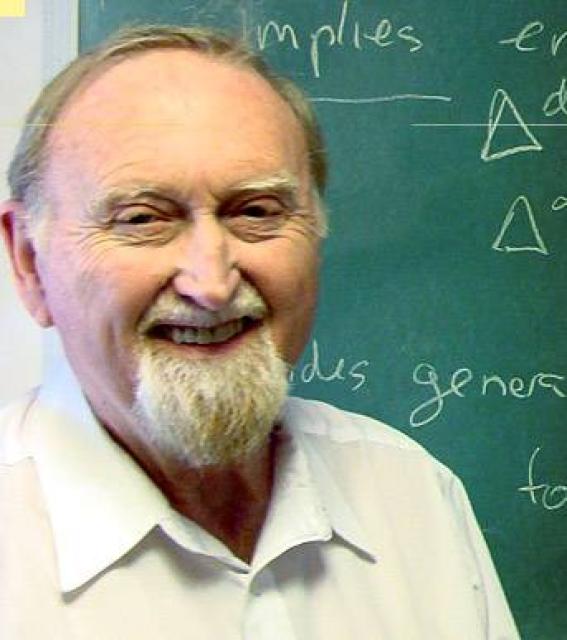
Clive Granger
 Great Britain
Biography of Clive Granger
Clive William John Granger, a British economist, was born on September 4, 1934, in Swansea, Wales. He was the son of Edward John Granger and Evelyn Granger. In the following year, his family moved to Lincoln. During World War II, Granger and his mother relocated to Cambridge, where he attended a local primary school. He then transferred to a secondary school in Cambridge, but continued his education in Nottingham, where the family moved after the war. It was during his school years that Clive showed his talent in mathematics and developed a keen interest in applied mathematics.
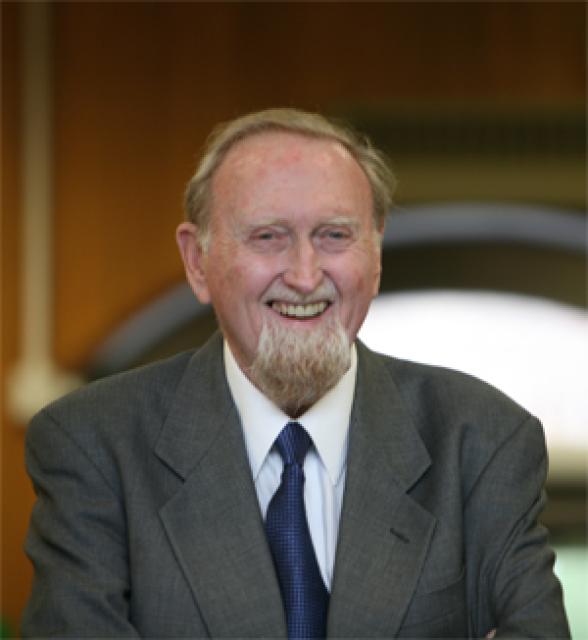
After school, Clive enrolled in the University of Nottingham, choosing economics and mathematics as his major disciplines. In his final year, he focused solely on mathematics. In 1955, Granger obtained his bachelor's degree and decided to stay at the university to pursue a Ph.D. in statistics under the guidance of Harry Pitt. In 1956, at the young age of 21, he was appointed as a lecturer in statistics at the University of Nottingham. As he was primarily interested in applied statistics and economics, Granger chose "time series analysis" as the topic of his dissertation, feeling that there had been insufficient research in this area at the time. In 1959, he defended his dissertation on "Testing for Non-Stationarity."
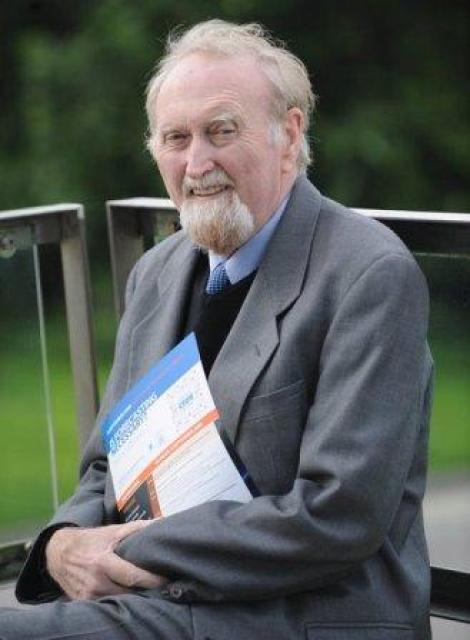
The following academic year, 1959-1960, he spent at Princeton University as a Harkness Fellow of the Commonwealth Fund. Clive was invited to Princeton by Oskar Morgenstern, with whom he participated in the development of an econometric research project. At the university, Granger also worked as an assistant to John Tukey, alongside Michio Hatanaka, on Tukey's project involving the use of harmonic analysis in economic data. At the end of his academic year at Princeton, Granger got married and embarked on a honeymoon in the United States. In 1964, he and Hatanaka published the results of their research on spectral analysis of economic series in a book. A year before the book's publication, Clive wrote an article titled "The Typical Spectral Shape of an Economic Variable," which appeared in the academic journal Econometrica in 1966. Both of these works had a significant impact on the adoption of new methodologies.
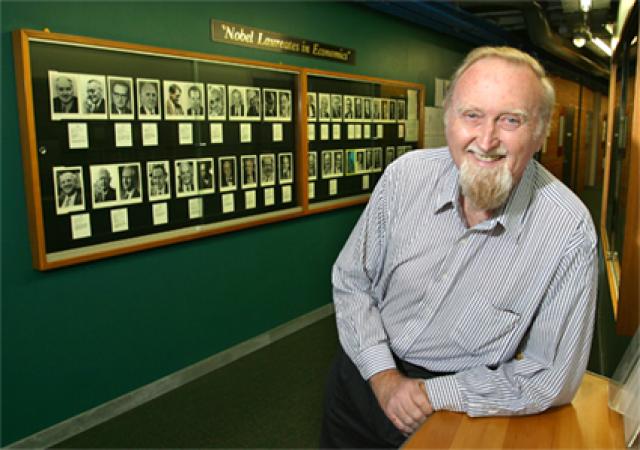
Granger signed a permanent contract with the University of Nottingham. In 1969, he introduced his concept of "Granger causality" in the journal Econometrica. The British economist was also interested in forecasting. Over the next few years, he collaborated with his student and post-doctoral researcher Paul Newbold, writing a book together that became a benchmark in time series forecasting. The book was published in 1977. Using modeling techniques, Newbold and Granger also wrote a renowned work in 1974 on spurious regression, which led to a reevaluation of previous empirical research in economics and econometric methodology.
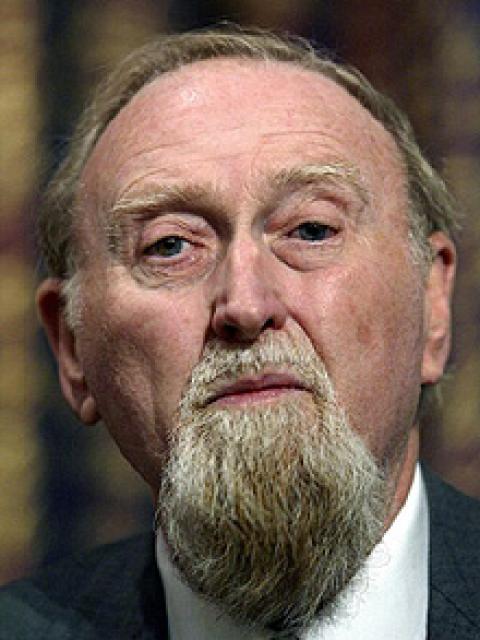
In total, Granger spent 22 years at the University of Nottingham. After receiving the Nobel Prize, the faculty buildings for economics and geography were renamed, with one of them being named the Clive Granger Building. In 1974, Granger moved to the United States and began working at the University of California, San Diego.
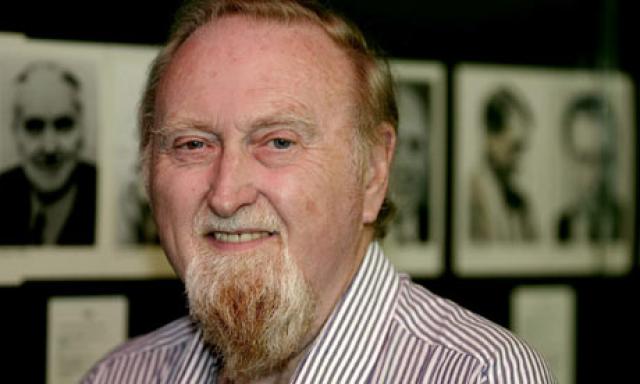
In 1975, he participated in the activities of the United States Census Bureau as a member of a commission led by Arnold Zellner. Specifically, Granger worked on seasonal adjustment. At his new university, he continued his research on time series, closely collaborating with Nobel laureate Robert Engle, Roselyn Joyeux, Timo Teräsvirta, and others.
Collaborating with Engle, Granger developed the concept of cointegration, which was published in Econometrica in 1987. For this work, Clive was awarded the Nobel Prize in 2003.
In the following years, Granger also applied time series methods to analyze data beyond economics. He worked on a project related to the Amazon rainforests, building a model for deforestation forecasting. The results were published in his book in 2002. Granger left the University of California in 2003 as an Emeritus Professor.
As a visiting professor, Granger visited the University of Melbourne and Canterbury University.
Clive was married to Patricia Granger from 1960 until his death. He is survived by his son Mark William John and daughter Claire Amanda Jane.
Granger passed away on May 27, 2009, at Scripps Memorial Hospital in La Jolla, California.
He was a member of the Econometric Society since 1972 and a Corresponding Fellow of the British Academy since 2002. In 2004, Granger was included in the "100 Welsh Heroes" list based on a public poll.


