Constantine III
 Italy
Italy- Constantine III: The Rise and Fall of a Roman Usurper
- Rise to Power
- The Loss of Britain
- The Rise of Constantine
- Constantine's Campaigns
- The Recognition of Constantine
- Emperor of the West
- The Invasion of Italy
- The Revolt of Gerontius
- The Italian Campaign
- Constantine's Downfall
- Defeat and Execution
Constantine III: The Rise and Fall of a Roman Usurper
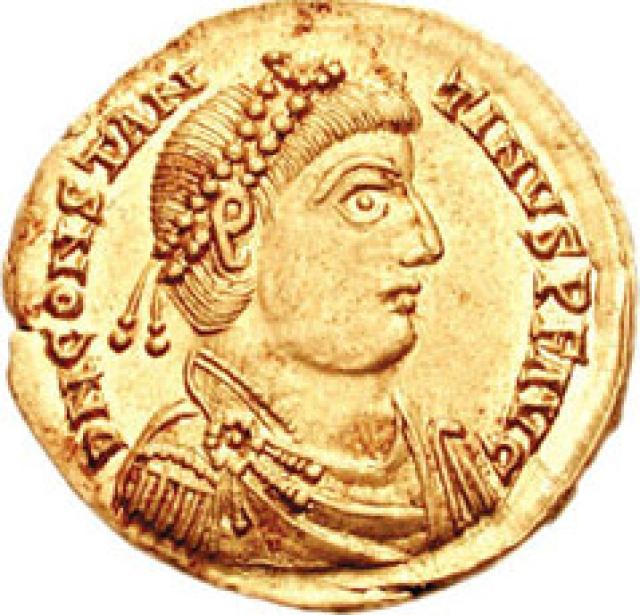
Constantine III, a Roman usurper who reigned from 407 to 411, emerged from humble beginnings as a soldier. In 407, he was proclaimed emperor in Britain and launched a rebellion against the western Roman emperor, Honorius, in Gaul and Spain.
Rise to Power
Constantine quickly gained control over parts of Gaul, while his son, Constans II, seized Spain. Honorius reluctantly recognized Constantine and his son as co-emperors. However, Constantine's rule was short-lived. A mutiny led by his general, Gerontius, weakened his authority, and he was defeated by Honorius' general, Constantius. Constantine was captured and executed in 411.
The Loss of Britain
Constantine's withdrawal of troops from Britain left the province vulnerable. In December 406, several Germanic tribes crossed the Rhine and began a devastating invasion of Western Roman territory. The Roman authorities failed to repel or destroy the invaders, who eventually settled in Spain and North Africa. The advance of the Franks, Burgundians, and Visigoths in Gaul was also unchecked during this time.
The Rise of Constantine
The presence of barbarians in Britain sparked unrest among the legions, who saw the emperor as unable to protect them. In 406, they proclaimed a soldier named Marcus as emperor, but he was soon killed by a rival, a local man named Gratian. Gratian was also murdered four months later, in 407.
The Roman military in Britain was desperate for leadership and security. They chose a man named Constantine, who took his name from the famous emperor from the early 4th century. Constantine's origins are unknown, but his name likely influenced the soldiers' decision.
Constantine's Campaigns
Constantine crossed the English Channel to Bononia and, according to historians, withdrew all mobile troops from Britain, leaving the province defenseless and contributing to its separation from the empire. In Gaul, Constantine faced little resistance from the prefect of the Praetorian Guard, Limenius, and the barbarian leader, Haribad.
Constantine's authority was recognized in Spain and along the Rhine frontier. Honorius sent an army against him under the command of the Gothic general, Sarus. Constantine's generals, Justinian and Neviogast, were defeated by Sarus. Constantine sent another army led by Edobich and Gerontius, who forced Sarus to retreat.
The Recognition of Constantine
Honorius and his general, Stilicho, learned of Constantine's uprising while preparing an expedition against Arcadius, the eastern emperor. Constantine's revolt forced them to abandon their plans.
Emperor of the West
In the summer of 408, Constantine, fearing an attack from Honorius' family in Spain, sent his son Constans, who had been living in a monastery, to the province with General Gerontius. Another son, Julian, was made Nobilissimus.
Constantus easily defeated Honorius' cousins, two of whom were captured while the others fled to Italy and Constantinople. Constans returned to Arelate, leaving his wife in Caesaraugusta under Gerontius' care.
At the same time, a mutiny in Ticinum against Stilicho led to Honorius' murder of the general. Sarus resigned his post as commander of the western armies, leaving Honorius vulnerable.
Fearing the Gothic army under Alaric, Honorius recognized Constantine as his co-ruler and appointed him consul in 409. Theodosius II in Constantinople did not recognize Constantine but allowed the mention of his and Constans' names on coins as "Victory of the Four Augustuses."
The Invasion of Italy
In 409, Constantine's power reached its peak. However, barbarian tribes had breached the Rhine frontier and, after two years of pillaging Gaul, reached the Pyrenees. They defeated Constantine's garrison and invaded Spain.
The Revolt of Gerontius
As Constantine prepared to send Constans back to Spain, he received news that Gerontius had revolted and proclaimed his ally, possibly his son, Maximus, as emperor. Constantine's fears of an attack from Spain were realized the following year when Gerontius invaded Gaul with barbarian allies.
Around the same time, Saxon raiders attacked Britain, which Constantine had left undefended. The Roman Britons and Armoricans, angered by Constantine's neglect and failure to protect them, revolted and expelled his officials.
The Italian Campaign
Hoping to restore his reputation, Constantine III launched a desperate invasion of Italy in 410. He crossed the Alps and entered Liguria, possibly after negotiations with the Magister Equitum, Allobich, who sought a more capable emperor to replace Honorius.
However, the campaign ended in disaster when Allobich was executed by Honorius on suspicion of treason. Constantine retreated back to Gaul in late 410.
Constantine's Downfall
Constantine's position became increasingly precarious. His army, which had been fighting Gerontius, was defeated at Vienna in 411, and his son Constans II was captured and executed. Constantine's Praetorian Prefect, Decimus Rusticus, refused to obey the usurper and joined a new rebellion in the Rhineland led by Jovinus.
Gerontius forced Constantine and his son Julian to take refuge in Arelate, which he then besieged. Constantine sent his general Edobich to northern Gaul and across the Rhine to raise a new army.
Defeat and Execution
However, Edobich was defeated on his approach to the city, falling for a ruse by Constantius. Constantine's last hope of relief vanished when the remaining loyal troops guarding the Rhine frontier refused to support him and put forward their own claimant to the throne: Jovinus.
Constantine was forced to surrender. Before opening the gates, he received ordination as a priest in the local temple. Despite promises of safety and his new ecclesiastical status, Constantius executed the deposed emperor thirty miles from Ravenna on September 18, 411.
Although Gerontius committed suicide in Spain and the Visigothic king, Ataulf, put down Jovinus' rebellion two years later, Roman rule in Britain was never re-established after Constantine III's death. Gaul became divided between Roman-controlled territories and a patchwork of Germanic kingdoms, though Constantine had briefly stabilized the western empire's Rhine frontier.
Constantine's deeds are known only from sources hostile to him. The image of the emperor presented in these sources is undoubtedly negative, but he must have been a man of some ability to have risen as he did and to have fought for several years against various enemies. Constantine's aim was to preserve the unity of the empire, at least up to the Alps.