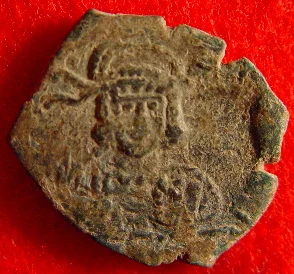
Constantine IV
- Heir in a time of upheaval
- The defense of Constantinople
- A new power in the Balkans
- The church and imperial authority
- Legacy
Constantine IV came to the Byzantine throne during a crisis on several fronts. The Arab caliphate pressed into imperial territory, political violence had just claimed his father, and disputes over Christian doctrine divided the church. His reign is best remembered for the defense of Constantinople against Arab attacks, but it also reshaped Byzantine relations with the Balkans and helped settle a major theological controversy.
Heir in a time of upheaval
Constantine was the son of Emperor Constans II and had been associated with the throne from childhood. While his father campaigned in the West, Constantine took on responsibilities in Constantinople. In 668, news arrived that Constans had been murdered in Syracuse. Constantine moved to Sicily, where he defeated the usurper Mizizios, then returned to secure the imperial succession.
The empire he inherited was under severe pressure. Arab forces had expanded rapidly across the eastern Mediterranean, while Slavic groups and the Avars threatened Byzantine positions in the Balkans. The new emperor faced the task of preserving the capital and holding together a state whose resources had been stretched by years of war.
The defense of Constantinople
Arab forces launched sustained attacks on Constantinople in the 670s, combining naval operations with pressure on the surrounding regions. The city’s massive defensive walls and Byzantine naval forces played a central role in resisting them. Greek fire, a combustible weapon used at sea, became especially important in the fighting.
By 678, the Arab campaign had failed to take the capital. Constantine’s government negotiated a truce with the caliphate, which later sources describe as lasting thirty years and involving tribute payments. The outcome checked the immediate advance toward Constantinople and gave the empire room to recover.
A new power in the Balkans
Constantine also confronted a new challenge north of the Danube. In 680, the Bulgar ruler Asparukh established a foothold south of the river. A Byzantine expedition against the Bulgars ended in defeat, after which the empire agreed to a settlement that included tribute. This marked a turning point: the Bulgar polity became an enduring neighbor of Byzantium, changing the balance of power in the Balkans for centuries.
The church and imperial authority
Religious divisions remained a central concern. Constantine convened the Sixth Ecumenical Council in Constantinople from 680 to 681 to address the Monothelite controversy, a dispute over whether Christ had one will or two. The council rejected Monothelitism and affirmed that Christ had both a divine and a human will.
The decision brought an end to a long and bitter theological debate, while also helping repair relations between Constantinople and Rome. Constantine took an active role in the proceedings, presenting the emperor as guardian of church unity and orthodoxy.
Legacy
Constantine IV died in 685 and was succeeded by his son Justinian II. His reign protected Constantinople at a moment when the city faced repeated external attacks, while his settlement with the Bulgars acknowledged a new political reality in the Balkans. By bringing the Monothelite controversy to a formal close, he also left a lasting mark on Christian history.