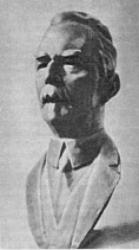
Dahn Ben-Amotz
 Israel
- Dan Ben-Amot
- Military Service and Kibbutz Life
- Private Life
- Final Days
- Burial
- Prose, Humor, and Journalism
- Hebrew Language Advocacy
Dan Ben-Amot
Birth and Early LifeDan Ben-Amot, born Moshe Teilimszajger in Rovne, Poland (now Ukraine) in 1923, was sent to Palestine in 1938 as part of the Youth Aliyah program. This act ultimately saved him from the Holocaust, which claimed the lives of his entire family. Upon arriving at Kibbutz Ben Shemen, he was given the Hebrew name "Moshe Simati."
Military Service and Kibbutz Life
In 1943, Ben-Amot joined the British Navy as part of the Jewish Yishuv's participation in World War II. After a month of service in Haifa, he deserted and settled in Kibbutz Beit-Keshet in Lower Galilee. There, he adopted the new name "Dan Ben-Amot."
Ben-Amot was instrumental in organizing illegal Jewish immigration to Palestine. He also participated in the establishment of "Shayetet 13," an elite naval commando unit. In 1947, he was sent to Europe to facilitate the immigration of Holocaust survivors.
Private Life
Ben-Amot had complex personal relationships. He married Helene Saint-Shore, a Christian woman, in 1951, bringing her to Israel. They had three children. However, their marriage ended in divorce in 1965 due to Ben-Amot's violent behavior.
He later lived with artist Batya Appollon, who bore him a daughter. Their relationship also ended in divorce in 1971, but they remained close friends. In 1984, Ben-Amot was convicted of sexual relations with a 12-year-old girl.
Final Days
In 1989, Ben-Amot was diagnosed with terminal liver cancer. He organized a farewell party at the "Hamam" nightclub in Jaffa, where he orchestrated the proceedings as he had done at previous "Hamam" events.
Shortly before his death, he met with religious singer and musician Yitzchak Fox, who played for him on his deathbed. His second wife, Batya Appollon, recalled that Ben-Amot, who had never been religious, was moved by the music.
Burial
Ben-Amot was buried in Kibbutz Sdot Yam.Literary Career
Cinema, Theater, and Radio
After the War of Independence, Ben-Amot worked as a Paris correspondent for Israeli newspapers. He also translated plays for the Cameri Theater. In 1950, he went to Hollywood, where he befriended Marlon Brando and appeared in a small role in "A Streetcar Named Desire" (1951).
Upon his return to Israel, Ben-Amot participated in the satirical radio show "Three in a Boat." He became known for his witty feuilletons, which were later published in the bestselling book "How to Do What?" (1962).
Ben-Amot also had a successful career in Israeli cinema. He played Uzi in "Exodus" (1960) and co-wrote the screenplay for "Three Days and a Child" (1967) with Paul Newman. He guest-starred as a psychoanalyst in Uri Zohar's "Hole in the Moon" (1965) and starred in his own screenplay, "The Siege" (1969).
Prose, Humor, and Journalism
Ben-Amot translated Erskine Caldwell's "Tragic Ground" into Hebrew in 1949. He also published short stories, collected in his debut "Four and Four: Stories" (1950).
His feuilletons, articles, and humorous tales demonstrated his attention to the nuances and expressive possibilities of Hebrew. Many of these were published in the book "Bag of Lies" (1956). He also wrote a satirical column, "What's Up?," which was published as a book in 1959.
In the late 1960s and early 1970s, Ben-Amot turned to novels. "Remember and Forget" (1968) explored themes of Holocaust trauma and the challenges of creating a new Israeli identity. "Don't Spit" (1973) depicted the struggles of a soldier severely injured in combat.
"Fucking Isn't Everything" (1979) became a cult classic. Combining autobiography, pseudo-biography, and personal anecdotes, it confronted sexual themes and bid farewell to the "blue dream" of writing a "serious" novel.
Hebrew Language Advocacy
Dan Ben-Amot was a pioneer in the use of Hebrew as a modern, living language. He advocated for the "Americanization" of Hebrew, making it more expressive and contemporary. His writing often shocked purists due to its frankness, which extended both to language and subject matter.
In 1972, Ben-Amot and Nativa Ben-Yehuda compiled the "World Dictionary of Hebrew Slang." This humorous yet scholarly work presented slang terms with illustrative examples and witty captions.