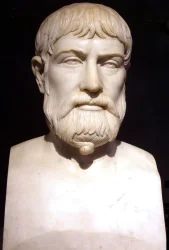
Damasus I
- A Roman Churchman
- Scholarship and the Vulgate
- The Papacy and Imperial Christianity
- Final Years and Legacy
Pope Damasus I led the Roman church during a period when Christianity was gaining the support of imperial power and the bishop of Rome was asserting a wider authority. His papacy, from 366 to 384, began in a bitterly contested election and became known for its patronage of biblical scholarship, its celebration of martyrs, and its firm defense of Nicene Christianity.
A Roman Churchman
Damasus was born around 305, probably in Roman Hispania, though accounts of his origins are uncertain. His father, Antonius, was a churchman in Rome, and Damasus served as a deacon under Pope Liberius. Through years of service, he became a senior figure in the Roman clergy at a time when disputes over doctrine and church leadership were closely entangled with imperial politics.
When Liberius died in 366, the election of his successor split the Roman community. Damasus was chosen by one group, while another faction supported the deacon Ursinus. The rivalry escalated into violence in the city’s churches. Ancient accounts disagree about responsibility and are shaped by the competing sides, but the conflict was severe. Emperor Valentinian I backed Damasus, and Ursinus was eventually exiled. The episode exposed how political influence and public force could shape the papal office.
Scholarship and the Vulgate
As bishop of Rome, Damasus cultivated a circle of learned clergy. His most consequential scholarly relationship was with Jerome, whom he encouraged to revise the Latin biblical texts in use at the time. Jerome’s work on the Gospels and later translations from Hebrew and Greek contributed to what became known as the Vulgate, the most influential Latin Bible of the Middle Ages.
Damasus also expressed his faith through poetry and monumental inscriptions. He composed verse epitaphs for martyrs and had them carved in the Roman catacombs, often in carefully designed lettering. These inscriptions helped preserve the memory of early Christian witnesses and made Rome’s sacred past visible to pilgrims. His patronage of churches, shrines, and inscriptions strengthened the city’s identity as a center of Christian memory.
The Papacy and Imperial Christianity
Damasus defended the Nicene understanding of Christian doctrine amid continuing disputes over the nature of the Trinity. He supported efforts to resolve conflicts in other major churches, including the struggle over leadership at Antioch. Under Emperor Theodosius I, Nicene Christianity gained official imperial backing through the edict of 380. That shift strengthened the standing of the Roman church, though it also brought religious policy closer to the machinery of the state.
Damasus promoted the authority of the Roman see, arguing that its connection with the apostles Peter and Paul gave it special standing. The scope of that authority was still contested, but his pontificate helped shape the language and institutions through which later popes would claim primacy.
Final Years and Legacy
Damasus died in Rome on 11 December 384 and was buried near the city’s catacombs. Later generations venerated him as a saint. His legacy combines scholarship and memory-making with the hard-edged politics of a contested episcopate. By supporting Jerome’s biblical work and preserving the stories of martyrs in stone, Damasus helped make Rome’s Christian past a foundation for its growing influence.