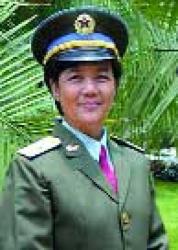
Dangatar Kopekow
 Turkmenistan
- Early Life and Education
- Service in the Soviet KGB
- Diplomatic Incident and Administrative Work
- Rise in the KGB and Politics
- Service in Independent Turkmenistan
- Terrorist Attack and Dismissal
- Later Life and Legacy
Early Life and Education
Dargylyk Kopikov was a prominent figure in the security and military apparatus of both the Soviet Union and Turkmenistan. Born into a Turkmen family, he graduated from the V. I. Lenin State Pedagogical Institute in Chardzhou in 1954. Before joining the KGB, he worked as a geography teacher and educational administrator in various schools and educational institutions.
Service in the Soviet KGB
Kopikov's career in intelligence began in 1959 when he joined the KGB of the USSR. After completing the KGB Higher School named after D. E. Dzerzhinsky in 1961, he served as a junior and later senior operative in the First Department of the KGB in Turkmenistan. In 1968, he was sent to Iran as an assistant to a KGB resident under the cover of an employee of the Ingosstrakh company in Mashhad.
Diplomatic Incident and Administrative Work
In 1971, Kopikov's cover was blown, and he was arrested and deported to the Soviet Union. His subsequent use abroad was deemed impossible, leading to his transfer to administrative roles within the KGB in Turkmenistan. Despite this setback, he continued to work in foreign intelligence, rising through the ranks to become Head of the First Department in 1975.
Rise in the KGB and Politics
Kopikov's career took a significant turn in 1984 when he was appointed Deputy Chairman of the KGB of Turkmenistan for Human Resources. He was then promoted to Deputy Chairman for Operations in 1984 and First Deputy Chairman in June 1990, attaining the rank of Major General. In March 1991, he became Chairman of the KGB of Turkmenistan. As a member of the Communist Party and the Central Committee of the Communist Party of Turkmenistan, Kopikov wielded considerable political influence.
Service in Independent Turkmenistan
Following Turkmenistan's independence in September 1991, Kopikov became the first Chairman of the National Security Committee until January 1992. He was also appointed the first Minister of Defense of Turkmenistan and simultaneously became the Rector of the Military Institute of Turkmenistan. Kopikov enjoyed significant influence over President Saparmurat Niyazov.
Terrorist Attack and Dismissal
In 1998, a terrorist attack in Ashgabat claimed the lives of seven people. The government alleged an assassination attempt on Niyazov and implicated members of the Turkmen army. On 17 September 1998, Kopikov was removed from his positions as Minister of Defense and stripped of his rank. He was subsequently appointed Head of the Department for Law Enforcement and Military Agencies within the Cabinet of Ministers. Several other military and intelligence officials were arrested and removed from office. Kopikov retired in 1999 and lived in Ashgabat until he was arrested in 2002 on charges of treason, attempted coup d'état, and illegal weapons sales. He was later convicted and pardoned. Some sources, however, claim that he was released without trial or served as a witness for the prosecution.
Later Life and Legacy
Kopikov passed away in a military hospital on 21 September 2011 and was buried near Ashgabat. He received the Order of the Red Star, medals from both the USSR and Turkmenistan, and the title of Honorary Elder of the People in 1995. Despite his controversial end, Kopikov remains a significant figure in the history of Turkmen security and politics.