Daniel Ortega
 Nicaragua
Daniel Ortega Biography
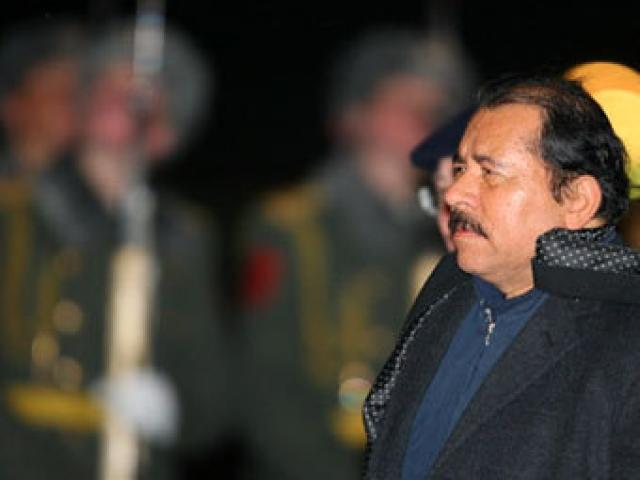
Daniel Ortega Saavedra, a Nicaraguan politician and one of the leaders of the Sandinista Revolution of 1979, was born on November 11, 1945, in the city of La Libertad. At the age of 15, he was first arrested for "revolutionary activities" in November 1960. After completing high school, he studied law at the Central American University in Managua. In 1962, he joined the ranks of the Sandinista National Liberation Front (FSLN). In December 1963, he was arrested in Guatemala and deported to Nicaragua. From 1965, the 20-year-old Daniel Ortega became part of the National Directorate of the FSLN. In 1966-1967, he served as the commander of the Central Front of the FSLN. He participated in a terrorist act on October 23, 1967, which resulted in the killing of one of the leaders of the Somoza regime's "National Guard," G. Lacayo. After his arrest in Managua on November 18, 1967, he spent 7 years in harsh imprisonment at the "Tipitapa" prison. He was released on December 30, 1974, as a result of an armed action by the FSLN and traveled to Cuba. In 1976, he illegally returned to Nicaragua and led armed struggle against the regime of Anastasio Somoza in several regions of the country. In 1979, he joined the Governing Council of the National Reconstruction Government. After the victory of the Sandinista Revolution, he headed the government of National Reconstruction (July 20, 1979), which, starting from 1980, with the support of the USSR and Cuba, began the construction of socialism in Nicaragua. Daniel Ortega received 50 T-54 tanks, 250 military advisers, and $125 million from the USSR. The USSR also provided diplomatic support to the Sandinistas after their agents assassinated Anastasio Somoza in Asuncion, the capital of Paraguay, in 1980. Since March 1981, Daniel Ortega has been elected as the coordinator of the National Directorate of the FSLN. In 1982, in connection with the intensification of anti-Sandinista guerrilla activities ("contras") supported by the United States, Ortega's government declared a state of emergency in the country, which lasted until 1988. In November 1984, Ortega was elected President of Nicaragua and officially assumed office on January 10, 1985. In 1987, Ortega's government faced serious economic difficulties and was forced to scale back almost all social programs. In February-March 1989, after the cessation of aid from the USSR, the Sandinista government began to seek ways to end the civil war, implemented a series of democratic reforms, and scheduled presidential and parliamentary elections for February 1990. In the elections held on February 25, 1990, the bloc of parties led by Violeta Barrios de Chamorro, the Union of National Opposition, defeated the Sandinistas. Violeta Chamorro received 55% of the vote, while Daniel Ortega received 40%. Exactly two months later, on April 25, Daniel Ortega stepped down as President in favor of Violeta Chamorro. After the defeat of the Sandinistas, Daniel Ortega expressed satisfaction that the "Sandinista Revolution did not become a mechanical copy of the Soviet or Cuban model" and that it used "mixed economy and political pluralism to restore and develop the country, create wealth to subsequently socialize it." He ran for president in the 1996 and 2002 elections but lost both times to candidates from right-wing forces. During the 2002 campaign, he welcomed private property and large capital, stating, "I have changed and learned from the past... Commander Ortega no longer exists."
Sexual Scandal
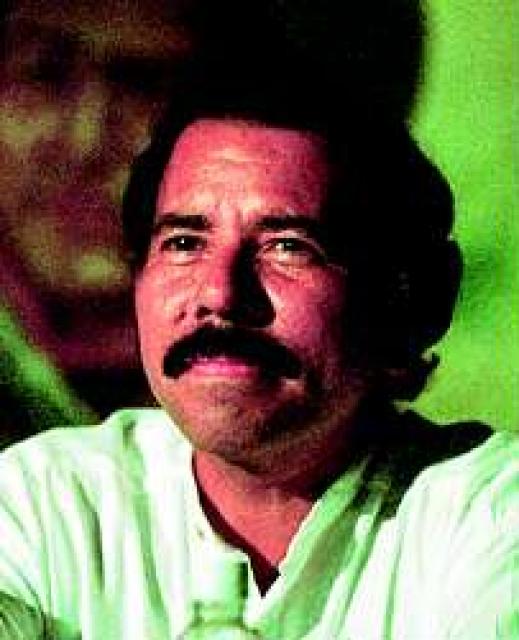
In 1998, a sexual scandal erupted around Daniel Ortega. The stepdaughter of former president Zoilamerica Narvaez Murillo submitted a 47-page document to the Nicaraguan Human Rights Commission, in which she detailed the sexual, emotional, and psychological abuse she suffered at the hands of her stepfather, Daniel Ortega, for almost 20 years, starting from the age of 11.