Daniil Samoylovich
 Ukraine
- Founder of Epidemiology in the Russian Empire
- Early Life and Education
- Contributions to Medicine
- Recognition and Later Career
Founder of Epidemiology in the Russian Empire
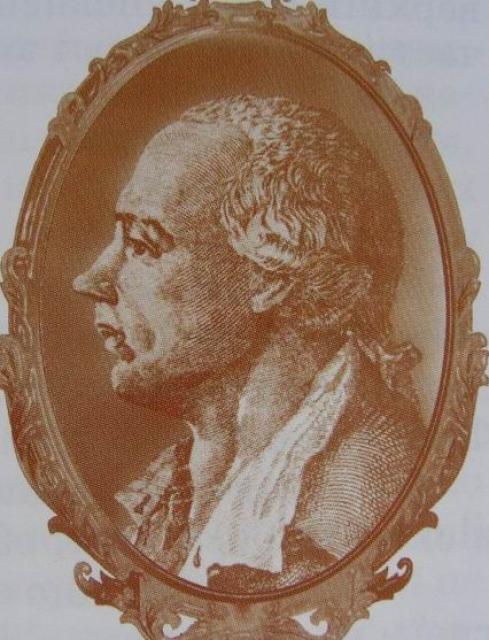
Daniil Samoilovich, a Ukrainian physician, was the founder of epidemiology in the Russian Empire. He was also the founder of the first scientific medical society in Ukraine.
Early Life and Education
Samoilovich was born into the family of Agafiya and priest Samuil Sushinsky. In 1756, he graduated from the Chernigov Collegium, and in 1761, he completed his studies at the Kiev Academy. Upon entering the academy, he changed his surname to "Samoilovich." From 1761 to 1765, he studied at the St. Petersburg Admiralty Hospital School, where he was specially selected by one of the school's professors from the students of the Kiev Academy.
Contributions to Medicine
In 1767, Samoilovich received the title of physician and became the head of the first women's venereal hospital in the Russian Empire. From 1768 to 1770, he served in the Russo-Turkish War as a regimental physician and significantly reduced the incidence of diseases and mortality among the troops.
In 1770-1771, he voluntarily participated in the fight against a plague epidemic in Moscow. He served as a member of the anti-plague commission and supervised plague hospitals. In 1776, he traveled to the University of Strasbourg and later to the University of Leiden to further his education. In 1780, he defended his doctoral dissertation "Tractatus de sectione symphyseous ossium pulis et. sectionem Caesareum" (Treatise on the Section of the Symphyseal Bones and Cesarean Section), which was reprinted twice. Samoilovich was the first physician in the Russian Empire to publish his doctoral dissertation and other scientific works abroad.
Recognition and Later Career
Samoilovich published several of his studies in Paris, proposing new approaches to the prevention, diagnosis, and treatment of the plague. He was elected a member of various surgical academies, including those in Paris, Marseille, Toulouse, Dijon, Mannheim, Turin, Padua, and the Russian Medical College. He continued his activities in Western Europe until 1783.
From 1784 to 1799, Samoilovich led the fight against the plague in Kremenchuk, Elizavetgrad, Odessa, and Crimea. For his energetic efforts in eliminating the plague in 1785, he was awarded the rank of Collegiate Councillor. In July 1784, he established the "Medical Assembly in Kherson," which became the first medical scientific society in the Russian Empire.
In the late 1780s and early 1790s, Samoilovich served as the head of the Bogoyavlensky Military Hospital and fulfilled the duties of a provincial physician in the Ekaterinoslav Governorate and the Taurida Region. From 1793 to 1799, he held the position of Chief Physician of the Quarantine Service in the south of Ukraine.
Starting from 1800, Samoilovich served as the Inspector of the Black Sea Medical Administration. His contributions to medicine and his dedication to combating epidemics left a lasting impact on the field of epidemiology in the Russian Empire.