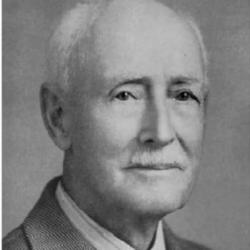
David Gartli
 Great Britain
- Biography of David Hartley
- Early Life and Education
- Contributions to Psychology
- Development of Associative Psychology
- Later Life and Legacy
Biography of David Hartley
David Hartley was an English physician and psychologist, known for being the creator of the first formalized system of associative psychology. Born in 1705 in Halifax, West Yorkshire, Hartley grew up in a family of Anglican clergymen.
Early Life and Education
Hartley received his early education at Bradford Grammar School, where he excelled in subjects such as mathematics and Latin. His keen interest in human nature and the workings of the mind led him to pursue a medical career. He attended Jesus College, Cambridge, where he studied medicine and graduated with a Bachelor of Medicine degree in 1729.
Contributions to Psychology
Hartley's most notable contribution to psychology was his theory of mental processes, which he viewed as reflections of brain vibrations. He adopted a parallelistic approach to the mind-body problem, drawing parallels to Newton's physical model. Hartley postulated that the simplest elements of consciousness, such as sensations, ideas, and the emotional tone of sensations, were interconnected through simultaneous and sequential associations, similar to mechanical connections.
Development of Associative Psychology
In 1749, Hartley published his groundbreaking work, "Observations on Man, His Frame, His Duty, and His Expectations." This book outlined his theories on associative psychology and gained considerable attention in academic circles. Hartley's ideas heavily influenced later psychologists, including John Stuart Mill and John Locke.
Later Life and Legacy
Despite his significant contributions to the field of psychology, Hartley's work did not receive widespread recognition during his lifetime. He continued his medical practice and also served as a clergyman in his later years. Hartley passed away in 1757 at the age of 51.
Today, Hartley's ideas are recognized as pioneering contributions to the study of psychology, specifically in the understanding of associative processes and the mind-body relationship. His work laid the foundation for future developments in the field and remains influential in modern psychology.