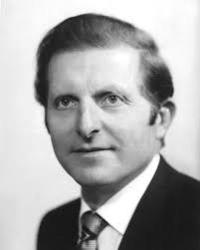
Deng Xiaoping
 China
ChinaBiography of Deng Xiaoping
Deng Xiaoping, a Chinese revolutionary, politician, and reformer, was a prominent figure in the Communist Party of China and the leader responsible for China's achievements and victories in recent decades. Born in 1904, Deng Xiaoping received an excellent education from his father, a prominent landowner. Education in China was a prerequisite for a successful career, and Deng Xiaoping traveled to France, where he worked as a foundry worker and later as a locksmith, always eager to learn and master new skills.

Joining the Communist Party of China on the recommendation of a friend, Deng Xiaoping energetically engaged in party work. However, within two years, he became a target of the authorities, and a warrant for his arrest was issued. Deng Xiaoping went into hiding under a false name in the Soviet Union, where he studied at the University of the Toilers of the East. He later returned to China and dedicated his life to being a professional revolutionary. He participated in the liberation of China alongside the Red Army and rapidly climbed the career ladder.

In 1956, at the eighth congress of the Communist Party of China, Deng Xiaoping was elected as the Secretary-General of the Central Committee of the Communist Party of China and became Mao Zedong's right-hand man. Deng Xiaoping became the main inspiration and organizer of the "Great Leap Forward," which aimed to transform China into a powerful communist state. The consequences of this campaign, however, were devastating, with almost complete destruction of agriculture and widespread famine. Deng Xiaoping, known for his cruelty, was responsible for the establishment of labor camps, similar to the Soviet Gulag system, which resulted in the loss of at least 50 million lives.
Deng Xiaoping's controversial personality overshadowed even Mao Zedong, leading to his exile along with his family to a remote province. There, he worked as a lathe operator in a tractor factory without losing his determination. Eventually, Deng Xiaoping was called back to party work, only to have Mao strip him of all his titles and privileges due to his jealousy. It was only after Mao's death that Deng Xiaoping assumed leadership of the party and the state.
In 1978, Deng Xiaoping initiated his famous reform and opening-up policies. He disbanded communes, distributed land, allowed free trade, and established economic zones where capitalist laws applied. Soon, Chinese goods flooded the global market, including the United States. China's economy surged forward at an unprecedented pace, with the development of large-scale industries and favorable conditions for foreign investments. China embraced the latest technological advancements, witnessed the rapid growth of cities, skyscrapers, hotels, stadiums, and a complete transformation of infrastructure. Significant efforts were made to reform education and promote scientific research, turning China into a powerful nuclear and space power. Deng Xiaoping played a crucial role in all these advancements. Nevertheless, he remained a dictator who tolerated no challenges to the party and his authority.
In 1989, when students demanded multi-party democracy, Deng Xiaoping ordered a brutal crackdown, stating, "Do not be afraid of sacrifices." Soldiers were instructed to shoot to kill, resulting in a violent suppression of the protests. Bodies were cleared away with bulldozers. Following the suppression, Deng Xiaoping appeared on television and happily announced to the nation that the anti-government rebellion had been completely quashed.
Deng Xiaoping passed away at the age of 93. He did not want a grand funeral or public mourning. Only his close relatives and colleagues bid him farewell. He did not wish to be buried, to avoid any form of pilgrimage, and instead, his remains were scattered over the ocean. Thus ended the life of the great reformer who was often referred to as the "Chinese Gorbachev."