Dileita Dileita
 Djibouti
- Education and diplomatic beginnings
- Prime Minister, 2001–2013
- African Union and regional diplomacy
- Return to parliament
- Public image and legacy
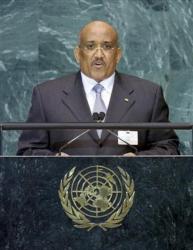
Dileita Mohamed Dileita has spent much of his public life moving between diplomacy, government and parliamentary leadership. He served as Djibouti’s prime minister for twelve years, represented the country in the Horn of Africa and at the African Union’s predecessor organization, and later returned to national politics as Speaker of the National Assembly. His career has often intersected with moments when Djibouti was working to contain regional conflict and manage domestic political divisions.
Education and diplomatic beginnings
Dileita was born in Tadjourah, Djibouti, on 12 March 1958. He studied in Egypt and Algeria before entering diplomatic service. In the early 1990s, he worked at Djibouti’s embassy in France. He later became ambassador to Ethiopia and represented Djibouti at the Organization of African Unity, the continental body that preceded the African Union. He also served as ambassador to Uganda.
The diplomatic work brought him into the regional conversations that mattered to Djibouti, a small country positioned beside the Red Sea and the Gulf of Aden. He took part in peace discussions involving Ethiopia and Eritrea and in negotiations between the Djiboutian government and a faction of the Front for the Restoration of Unity and Democracy, or FRUD, which had fought an insurgency. A framework agreement was signed in Paris in February 2000.
Prime Minister, 2001–2013
President Ismaïl Omar Guelleh appointed Dileita prime minister in 2001. He remained in the role until 2013, making him one of the longest-serving heads of government in Djibouti’s post-independence history. During that period, he also led the Union for the Presidential Majority, the governing coalition, from 2008 to 2012.
His tenure unfolded in a political system dominated by Guelleh’s ruling coalition. The 2013 parliamentary election, held shortly before Dileita left office, was the first in a decade in which opposition groups participated. Opposition leaders alleged irregularities in the results and boycotted parliament afterward; the government disputed the accusations. The political dispute led to months of tension and protest. Dileita was replaced as prime minister in April 2013.
African Union and regional diplomacy
After leaving government, Dileita continued to work in diplomacy. In June 2014, the African Union appointed him Special Envoy for Libya. His mandate was to consult with Libyan authorities and other stakeholders, support efforts toward stabilization and reconciliation, and coordinate with neighboring countries and international partners. The appointment drew on his earlier experience as a diplomat in the region and his years as Djibouti’s head of government.
In the same year, Japan awarded him the Grand Cordon of the Order of the Rising Sun. The Japanese government recognized his contribution to relations between Japan and Djibouti, Japan’s anti-piracy operations, and bilateral friendship.
Return to parliament
Dileita re-entered national leadership in March 2023, when members of the National Assembly elected him Speaker. In his remarks after being received by the president, he referred to his combined experience in government and parliament and expressed hope that it would help the country pursue its development goals. The Inter-Parliamentary Union lists him as Speaker from 5 March 2023, and Djiboutian official reports have continued to identify him in that role.
His parliamentary work has included representing Djibouti in international forums. He led delegations to meetings of the Inter-Parliamentary Union and engaged with counterparts in the region and beyond. The role places him at the head of the legislature after a long career spent principally in the executive and diplomatic branches.
Public image and legacy
Dileita is associated with a steady, institutional style shaped by long service in diplomacy and government. His public profile is closely tied to President Guelleh’s governing coalition, and his prime-ministerial years took place amid recurring disputes over electoral rules and opposition participation. At the same time, his career includes a sustained regional diplomatic role, including assignments connected to peace efforts and the African Union’s work in Libya.
From ambassador to prime minister, African Union envoy and Speaker of the National Assembly, Dileita’s career reflects Djibouti’s central place in Horn of Africa diplomacy. He has remained a prominent figure in public life across several political eras, while continuing to frame his work around institutional cooperation, regional stability and national development.