Dimitrije Katic
 Serbia
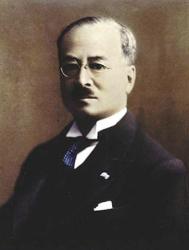
Dimitrije Katić was a Serbian politician whose public life joined parliamentary reform with practical work in his home village. A farmer by occupation and one of the early figures of the People’s Radical Party, he rose from local leadership to the presidency of Serbia’s National Assembly, while promoting education and agricultural cooperation in the Resava region.
From Crkvenac to Public Life
Katić was born in Crkvenac, in central Serbia, in the mid-1840s. He attended school in nearby Svilajnac and completed the State Trade School in Belgrade around 1860. After his father died, he returned to Crkvenac to manage the family farm. Rather than leaving village life behind, he used his education and standing as a local landholder to bring new farming methods to the community. He introduced improvements in agriculture and livestock breeding, and his advice was sought in neighboring villages.
His local reputation soon carried him into politics. Elected to the National Assembly in the mid-1870s, Katić became associated with the emerging Radical movement and was counted among the early organizers of the People’s Radical Party. He represented a strand of Serbian politics rooted in rural concerns and resistance to centralized authority. In 1878, during the Serbian–Ottoman War, he served as a squadron commander and received military decorations.
A Radical in Parliament
Katić’s parliamentary career unfolded during a turbulent period in Serbia, as political factions contested the reach of the monarchy and the shape of representative government. He served repeatedly as a deputy and took part in constitutional work. His willingness to challenge the government brought him into conflict with King Milan Obrenović, particularly over measures aimed at political opponents. Contemporary accounts remembered him as a firm defender of civil and political rights.
In 1891, Katić became president of the National Assembly. The Serbian Parliament’s historical records list him as speaker during the 1891 legislative session and again during the 1891–92 session. His rise to the chair was striking for a man whose public identity remained closely tied to his village and farming life. He presided over the Assembly at a time when parliamentary procedure and the authority of elected representatives were central issues in national politics.
Cooperation and a Rural Legacy
Katić’s work outside parliament was equally important to his reputation in Resava. In 1897, he helped establish an agricultural-credit cooperative in Crkvenac, regarded in local accounts as among the earliest of its kind in Serbia. Cooperative credit gave farmers a way to pool resources and support their livelihoods. He also supported local education: he helped found a school in Crkvenac and contributed to the development of the secondary school in Svilajnac.
Katić died in Crkvenac in 1899, where he had spent much of his life. His legacy is remembered locally through the school and community institutions associated with his name, as well as through his cooperative work. He was a political leader who remained grounded in the concerns of ordinary rural households, carrying those concerns into the National Assembly while continuing to invest in the place he called home.