
Dinastia Dyuponov
 USA
USAThe Dynasty of DuPont
Entrepreneurs in Northern Delaware call it the land of the DuPonts: the road leading to the state capital, the city of Wilmington, is named DuPont Highway, and they own everything in Wilmington, from factories and banks to a computer corporation. The surrounding towns of Wilmington seem like a piece of France - road signs constantly remind you of it: Namur, Chevannes, Bore de Fosse, Monchane, and Granua. French used to dominate the streets of each town - for a hundred years, the DuPonts primarily hired French people. For outsiders, "DuPont de Nemours" is a giant multinational company with assets worth $211 billion, subsidiaries in Europe and Latin America, a global monopoly on nylon, orlon, dacron, and Teflon, dozens of chemical plants, and aircraft and weapon production. By the mid-20th century, there were already about 1,500 DuPonts; five hundred of them were considered multimillionaires, two hundred and fifty were part of the immediate family circle, and eight ruled its destiny. Delaware was accustomed to the DuPonts: Edward DuPont, the first vice president of the Wilmington Trust Company - the financial center of the clan's power, used to sit with his managers in the city club and was one of the best parishioners of the city church.

The Legendary DuPont Family
The famous hunts and balls of the DuPonts are a thing of the distant past - after World War I, which brought them hundreds of millions, they hunted foxes while riding blood horses, surrounded by hunters and packs of hounds, wearing 18th-century coats, tricorn hats, and powdered wigs. At family celebrations, they danced in costumes of marquises and marquesses from the time of Louis XV and traveled between homes in gilded carriages - their estates, built in the style of feudal castles and Versailles palaces, still surround Wilmington. For almost two hundred years, the DuPonts have embodied a special aristocratic style - understated wealth and effective power; legends are still told in the city about their family secrets, adulteries, suicides, sudden and tragic deaths that have haunted this family. The grand hall of the Wilmington Trust Company is adorned with darkened portraits of their ancestors: the gallery is opened by a fair-haired lady and a stately broad-faced gentleman in a powdered wig. The official genealogy of the DuPonts describes the meeting of the dynasty's founders in idyllic tones: a fragile blonde girl sat in her attic on Rue de Richelieu, painting miniatures and looking out the window opposite. There, a handsome young man named Pierre Samuel DuPont, her neighbor-clockmaker, posed gracefully, practicing the noble art of fencing - a feint followed by a parry, the sword pierced the target painted on the wall... Anna Alexandrine had big blue eyes, delicate skin, and a highly developed imagination: she dreamed of great love and saw in her neighbor (with his big nose, proud stature, and broad shoulders) the embodiment of all perfections. Anna Alexandrine, left an orphan at the age of 8, lived with wealthy relatives - her aunt and uncle - and grew up with their own daughter, becoming friends. When they turned into young ladies, they were offered the position of housekeeper in a distant estate - otherwise, they could go their separate ways. She chose the latter: now, living on Clockmaker Street, the destitute girl made a living by painting clock faces. A few months later, Samuel and Anna Alexandrine got married: the watchmaker, being a Protestant, chose to marry her when he found out that the pretty neighbor shared his faith. She moved her belongings across Rue de Richelieu and settled into the same room where she first saw her husband. Anna Alexandrine was only sixteen. Several years later, she was bitterly disappointed in her marriage. One of Mr. DuPont's main principles of life was profound ignorance: his ancestors adhered to Protestantism (and were considered dissidents in Catholic France), many of his Huguenot friends were in prison, so Samuel preferred not to stand out. He had his own method of self-preservation: Mr. DuPont could neither read nor write - therefore, the royal officials could not accuse him of studying forbidden books. He did not know a single letter or digit and, in addition to everything, was as stubborn as a mule and as self-absorbed as a peacock. Educated and cultured Anna Alexandrine found it difficult to live with him. Their son Pierre grew up as an extraordinary child. He resembled his father only with his enormous, almost eagle-like beak nose (to this day, a big nose remains a hereditary trait of the DuPonts - like the heavy jaw of the Habsburgs or the upturned lip of the Bourbons). Pierre was lame, weak, and fragile from childhood, but he had a brilliant memory and a quick mind: at the age of twelve, he knew French grammar by heart and could freely translate Latin. Pierre was a kind-hearted boy: when his red-haired, freckled, and foolish cousin Marianne fell ill with smallpox, he sat by her bed for days and ended up getting infected. After a few days, doctors, unable to find a pulse, pronounced him dead. The whole night before the funeral, Anna, devastated by grief, sat beside her son's coffin, praying for the repose of his soul. By morning, the mother had fallen asleep when Pierre suddenly cried out: the boy had survived, although his face was horribly disfigured. His cheeks and forehead were covered in smallpox scars, one eye was affected by farsightedness, the other - nearsightedness: over the years, Pierre DuPont decided that fate marked its chosen ones in this way. "I am grateful to nature and chance," he wrote in his memoirs, "for giving me the ability to have the full range of vision." The mother wept, and the father made his son take up fencing - Samuel DuPont believed that the sword was a universal means of strengthening the body and spirit. In the evenings, they practiced lunges, and the days were spent at work: the father decided to make a watchmaker out of his son. So several years passed, and then Anna Alexandrine died in childbirth. Before her death, joining her husband's and son's hands, she said, "Try to live happily." They did not succeed - after his mother's death, Pierre strayed from the true path. He made acquaintances with aspiring writers and young actors, drank with them, disappeared backstage, and went to brothels. In addition, the young man took up writing poems and became addicted to empty reflections: he locked himself in the attic and meditated for hours, staring at the ceiling beam. One day, when Pierre was caught doing this, his father beat him like a dog and then threw him out of the house. Crippled, disfigured by smallpox, and half-blind, the youth found himself on the streets of Paris with no money in his pocket - this is how Pierre DuPont's brilliant career, as a publicist and merchant, began. Friends did not let the poor boy die of hunger - a familiar watchmaker took him in. A few years later, Pierre entered his father's workshop, holding magnificent clocks with carved oak cases and engraved silver dials. It was inscribed: "Designed and made by the son of DuPont, dedicated to his father." Pierre silently bowed, handed the gift to Samuel, and left his childhood home - this time forever. He repaid his filial debt and forever rid himself of guilt. And the father could not read the dedication and did not understand its meaning, even when a literate neighbor came to his aid - Pierre had no business with it until then. Many years have passed since then, but Samuel DuPont never saw his son again. Pierre did not even attend his father's funeral - now he was living a different life. Pierre DuPont became a friend and advisor to the French Prime Minister, Baron Turgot, edited an influential magazine, successfully speculated on the stock exchange, and attended receptions with the king.
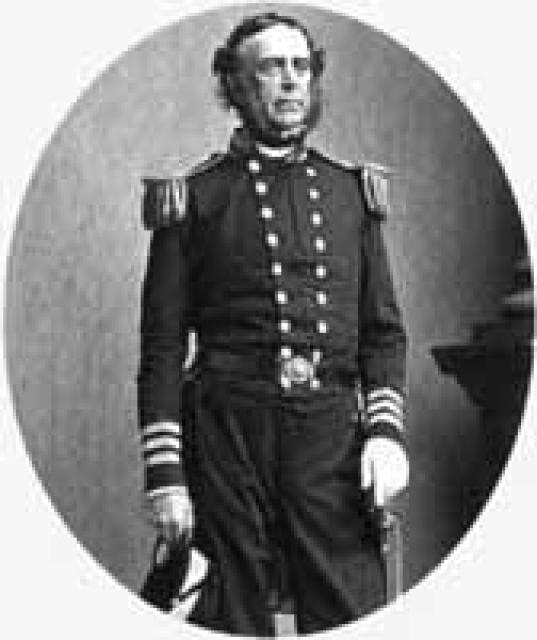
Biography of the DuPont Dynasty
It all began when Pierre DuPont wrote an economic essay, which happened to catch the eye of Baron Turgot. The official was impressed by the style and perfect argumentation and took the young talent under his wing. Soon, Pierre was offered an excellent position with a large salary. His career was secured, and now he could think of starting a family.

When he was destitute and persecuted, he was taken in by the relatives of his mother, the Dor family. In their estate lived Charlotte Marie Louise Le Dae, also a distant relative of Pierre. She was a slightly overripe girl (she was already eighteen at the time), and a neighbor, a fifty-five-year-old tax collector and widower, who had buried two wives, was considered a good match for her. Pierre rushed to her aid, promising to marry her. The young man asked for two years - during this time, he promised to get his affairs in order. Young DuPont kept his promise, even though by that time it was clear that there was no love between them. However, this did not prevent Marie Le Dae from giving him two sons - one of whom, following the family tradition, rebelled against his father...
In the grand hall of the Wilmington Trust Company hang portraits of both Pierre DuPont's sons. The tall, dark-haired Victor did not want to study and failed at any job: he resembled his grandfather, Samuel DuPont, in every way. The younger, Eleuther Irenee, inherited his father's features and talent: short stature, firm mouth, pronounced scientific abilities, and a serious attitude towards life. Pierre sent him to study with his friend, the famous chemist Lavoisier, who headed the gunpowder mines of the French kingdom. After a few years, Eleuther Irenee knew everything about gunpowder: it was he who laid the foundation for the DuPont empire.
But the revolution changed their lives - in 1799, the DuPonts fled from France, as they were among those who tried to protect the king. The father and sons fought off the sans-culottes at the Tuileries Palace, and then, miraculously avoiding the guillotine, went into hiding - but they still could not settle into their new life. The ship "American Eagle" that sailed from Toulon was loaded with their furniture, pianos, and silverware. The entire three-month voyage across the Atlantic, the DuPonts guarded their belongings with unsheathed swords in hand - the crew did not inspire trust.
The "American Eagle" docked in Newport Bay, Rhode Island, and the DuPonts went to the nearest house. Pierre knocked on the door - it was not opened to him; he looked through the window and saw a set table. Bells were ringing, a Christmas service was being held in the church, and the homeowners were waiting for the turkey and apple pie they never tasted: the DuPonts broke into the house and, in the name of liberty, equality, and fraternity, ate everything on the table. Dawn broke on a frosty morning on January 1, 1800 - a new century began, and in America, it became the century of the DuPonts.
They brought two hundred thousand francs in cash with them - before leaving France, Pierre DuPont established a joint-stock company called "Pontiania" for land speculation and issued shares. But America was filled with its own speculators who had long inflated the prices of unsettled land. Then Pierre DuPont began smuggling Spanish gold, which also did not succeed. He never became rich from it, but he contributed to history - DuPont senior met the future US President Thomas Jefferson in France, and Jefferson entrusted him with mediating the negotiations between France and the United States. Thanks to DuPont, Napoleon sold Louisiana to America, doubling its territory.
The United States saved a lot of money on this deal, but Pierre DuPont did not earn a cent from it. Victor pushed him out of the business and, becoming the head of the company, completely destroyed "Pontiania." Pierre fell into melancholy and died a few years later. Victor outlived his father for a short time, dying on a New York street from a heart attack. Now the family was led by Eleuther Irenee. During his reign, the DuPonts became a closed clan, shrouded in legends, living by their own laws. Irenee had three sons and twenty-four grandchildren. They were interested in chemistry, tried their hand at business, and, following tradition, the family business fell to the most talented and resourceful. The DuPonts no longer dealt with land - now they made money on death...
Quiet, introverted Irenee did not at all resemble a businessman. He was what he seemed to be: a scientist to the core, a person obsessed with chemical formulas. In addition to his academic merits, the new head of the clan was observant and had a sense of opportunity. America turned out to be a country of armed people, and Eleuther Irenee knew how to make the best gunpowder in the world. Soon the powder mills in Brandwine village were in full swing, and the DuPonts' fascination with the theory of explosives became hereditary. However, they changed their name: in democratic America, the plebeians DuPont turned into French aristocrats du Pont de Nemours. The Parisian watchmaker's children began calling themselves marquises, and Nemours - the village where Pierre DuPont met Marie Le Dae - turned into their ancestral estate.
People in Brandwine did not learn about what was happening in the world from newspapers. The DuPonts' gunpowder factories were located here, and if there was a war somewhere, the mines operated around the clock. However, this news quickly spread to the neighboring towns - in their haste, workers forgot about safety rules, and explosions could be heard for dozens of kilometers, with a fiery column sometimes throwing people across the river to the streets of the neighboring town.
The DuPonts fed the whole region, and they were treated with almost religious reverence - they were lucky, rich, and made ever more advanced gunpowder. But no one felt love for them: too many men from Brandwine died in their mines. The stories that circulated about them in the town sounded more like scary fairy tales that children are told on Halloween.
The old people said that the DuPont clan had a special fate: they live differently but die the same. It is no coincidence that Eleuther Irenee, who outlived his brother by seven years, grabbed his heart on the same New York street where Victor died, and they took him to die in the same room of the same hotel. They said that they always had to pay for their sins: under Alfred DuPont, Irene's son who took over the company in 1837 (according to the portrait, he had a big nose, fleshy cheeks, and a sharp, piercing gaze), the powder mines operated around the clock. Accidents followed one after another - as a result, he experienced such a severe nervous shock that he had to step down from his duties.
They also recalled the shadow of the unfortunate Cohen, a former worker in the DuPont mines. Some of the old folks swore that they had seen him wandering around Henry DuPont's house, holding a Bible in one hand and the very same rope in the other... In 1852, two powder mines exploded, and Henry blamed Cohen for it. The poor man swore on the Bible that he was not to blame, but DuPont threw him out, and that same night, Cohen hanged himself.
The old folks speculated about retribution: a few years later, Alexis DuPont died in an explosion at a mine. When his eyes closed, Henry DuPont turned gray.
During the Civil War, the mines exploded 11 times: 43 people died, and hundreds were maimed. The DuPonts also had to pay for this: fate took its revenge on poor Charlotte Shephard Henderson DuPont.


