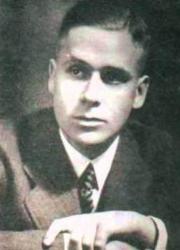
Djovanny Pierluigi da da Palestrina
 Italy
ItalyBiography of Giovanni Pierluigi da Palestrina
Giovanni Pierluigi da Palestrina, a remarkably talented figure, stands out among the great figures of the Renaissance in the history of 16th-century music. Very little is known about his childhood, and the exact date of his birth is only approximate: he was born on December 17, 1525, near Rome in the town of Palestrina, from which he took his name. At a young age, Palestrina joined the choir of the Papal Chapel. He received his musical education at the School of Goudimel, from which he acquired remarkable polyphonic techniques and a clear understanding of the purity of spiritual style and the harmonious combination of sounds.
From 1544 to 1551, he served as an organist and choir director at the main church in Palestrina. In 1551, he moved to Rome, where he successively held positions as a singing teacher and director of the children's choir at the Capella Giulia (at St. Peter's Basilica). Under Pope Marcellus II, Palestrina's position improved significantly. After becoming a singer in the Sistine Chapel in the Vatican, Palestrina was able to dedicate a large part of his time to his compositional activities. By that time, Palestrina was already married and had children, so he had to obtain a special permission to work in the Sistine Chapel, as the rules prohibited non-monastic individuals from serving in this sacred place. However, despite the church's blessing, fate treated him very harshly: unexpectedly, against his wishes, he was dismissed from his position, and during a plague epidemic, he lost his wife, two sons, and a brother, which greatly hindered his creative work. Only the positions of chapel master at the Lateran Palace and at the Santa Maria Maggiore church saved him from extreme poverty.
In 1560, Palestrina caught everyone's attention with his Improperia. His simple, beautiful, and harmonious music made a strong impression, and the Council of Trent entrusted Palestrina with composing a trial mass that would demonstrate the possibility of figural music in church worship. The complexity of contrapuntal intricacies was detrimental to the clarity of the text and musical well-being. Palestrina composed three masses for six voices. All three possessed remarkable qualities: the first was characterized by a strict style, the second by tenderness, depth of feeling, and elegance, and the third, both in form and expression, represented the highest manifestation of the composer's genius. Dedicated to the memory of Pope Marcellus, Palestrina's third mass became known as the "Pope Marcellus Mass" and set an example for imitation. These masses settled the fate of figural music in its favor. Pope Pius IV, upon hearing the mass, exclaimed, "Here Giovanni (that is, Palestrina) in earthly Jerusalem gives us a premonition of the singing that the holy apostle John heard in heavenly Jerusalem in prophetic ecstasy." Since then, it became mandatory for composers of Catholic sacred music to compose in the style of Palestrina.
Not surprisingly, Palestrina held the honorary position of chapel master at St. Peter's Basilica from 1561 until the end of his life. Due to his services to the church, he was buried there in 1594. Palestrina wrote numerous sacred works during his lifetime: about 100 masses, 68 offertories, over 200 motets, hymns, and other choral compositions. The music of his masses fully corresponds to the grandeur of the liturgical ceremony and becomes its integral part. Palestrina used the knowledge of musical theory and the art of preceding generations, particularly the complex technical art of the representatives of the Netherlandish school, in his compositions. He managed to give it new meaning and, most importantly, made it more human and understandable. That is why he can be called a great composer.
Palestrina remains unmatched as a master of polyphony, the so-called "many-voiced" style. All voices in his works truly sing and, with their harmonious sound, create an entirely new harmony. The composer simplified the technique of coloratura singing, carefully ensured the correct pronunciation of liturgical words, and sought to avoid any excesses in music. He primarily composed vocal music, with the organ either accompanying or not used at all, making Palestrina the brightest representative of a cappella choir singing (without accompaniment). The comprehensive perfection of Palestrina's choral music allows for comparisons with the great Italian Renaissance artist Raphael. The composer created a new style that influenced not only the Roman musical school but also the development of music throughout Europe. Despite this, his music gradually disappeared from the church and secular repertoire and was only revived in the 1930s with a powerful movement for the renewal of church music. It is only now that contemporary musicians are approaching stylistically accurate performances of his compositions.