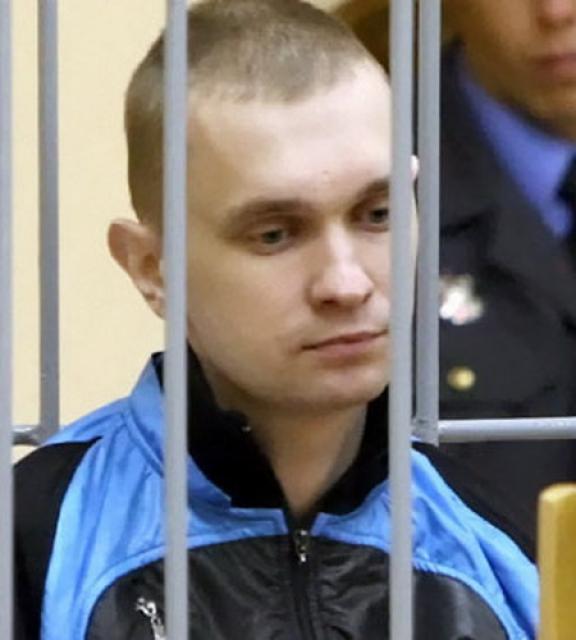
Dmitriy Konovalov
 Russia
Dmitry Konovalov became known to the public through one of the deadliest attacks in Belarus’s post-Soviet history. A resident of Vitebsk, he was convicted by Belarus’s Supreme Court of carrying out the April 2011 bombing of the Minsk metro, an attack that killed 15 people and injured more than 300. He was sentenced to death and executed the following year. The case also drew sustained international criticism over the fairness of the trial and the reliability of the evidence.
Early life and arrest
Konovalov was born in Vitebsk, Belarus, on 22 February 1986. He was raised in the city and, as a young adult, trained and worked in metalworking. He was a longtime friend of Uladzislau Kavalyou, who would later be tried alongside him.
Belarusian authorities linked the pair to earlier explosions in Vitebsk and Minsk. The Supreme Court’s 2011 verdict found Konovalov guilty of a series of attacks, including explosions in Vitebsk in 2005, an incident in Minsk in 2008, and the 2011 metro bombing. Kavalyou was convicted of involvement in some earlier incidents and of assisting Konovalov. These were findings of the state court; international observers later questioned whether the proceedings met fair-trial standards.
The Minsk metro bombing and trial
On 11 April 2011, an explosion at the Oktyabrskaya station in central Minsk killed 15 people and injured hundreds. The bombing shocked the country and prompted a major investigation. Konovalov and Kavalyou were arrested soon afterward. At trial, Konovalov acknowledged responsibility, while Kavalyou withdrew his earlier confession, saying it had been obtained under pressure.
The Supreme Court convicted both men and sentenced them to death on 30 November 2011. Amnesty International and the Council of Europe’s Parliamentary Assembly raised serious concerns about the process, including questions about the confessions and the handling of evidence. Those criticisms did not change the verdict, but they became an important part of the case’s public record.
Execution and contested legacy
Belarusian authorities executed Konovalov in March 2012, several months after the sentence. The executions were carried out in secrecy, and the bodies were not returned to the families for burial. Human rights organizations condemned both the use of capital punishment and the secrecy surrounding the executions.
The victims and survivors of the Minsk bombing remain at the center of the tragedy. Konovalov’s biography is therefore inseparable from the crime for which he was convicted, and from the questions raised about the judicial process that followed. His case became a focal point in international criticism of Belarus’s use of the death penalty and its handling of high-profile criminal trials.


