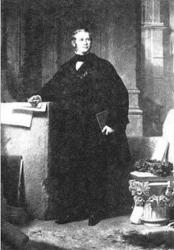
Drouet de Dammartin
 France
- Drouet de Dammartin: Master Architect and Sculptor
- Prominent Commissions
- Grand Vision: The Carthusian Monastery of Champmol
- Legacy and Influence
Drouet de Dammartin: Master Architect and Sculptor
Early Years and CollaborationDrouet de Dammartin was an architect and sculptor who flourished in France and Burgundy during the late 14th century. His life and work are primarily known from financial documents, which reveal his involvement in several major projects of the era. In 1362, he worked under the direction of Raymond du Temple on the reconstruction of the Louvre for King Charles V, where he is credited with creating a monumental spiral staircase.
Prominent Commissions
In 1375, de Dammartin and his brother, Guy, participated in the construction of the palace of Duke Jean de Berry in Bourges. Later, in 1380, he travelled to Troyes with other Parisian masters to inspect the stonework of the cathedral.
Grand Vision: The Carthusian Monastery of Champmol
In 1383, de Dammartin received a prestigious commission from Duke Philip the Bold of Burgundy to design the Carthusian Monastery of Champmol near Dijon. This architectural complex was envisioned as the burial place of the Burgundian branch of the Valois family and a symbol of the capital's grandeur.
Legacy and Influence
Although little of the monastery remains today, de Dammartin is generally attributed with the design of its portal, which draws inspiration from the portal of the Celestines Church in Paris. In the same year, he was appointed as the overall supervisor of building works in the domain of the Duke of Burgundy, collaborating with Jacques de Neuilly on the Sainte-Chapelle in Dijon. Drouet de Dammartin died around the year 1400, leaving an indelible mark on the architectural landscape of France and Burgundy.