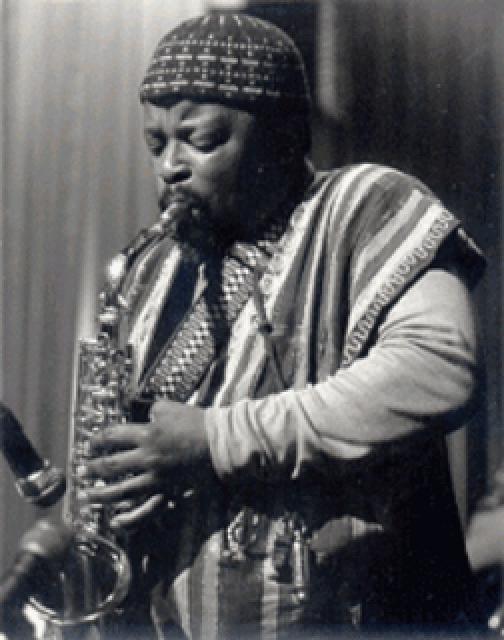
Dudu Pukwana
 South Africa
- Early Life and Career
- The Blue Notes and Beyond
- European Exile and Brother of Breath
- Collaborations and "Zila"
- Later Career and Legacy
Early Life and Career
Dudu Pukwana was born in South Africa and began his musical journey with the piano. However, his true calling was discovered when he switched to the saxophone in 1956, inspired by Nick Moyake. He gained early recognition by winning the Johannesburg Jazz Festival in 1962 while performing with Moyake's Jazz Giants.
The Blue Notes and Beyond
In 1964, Chris McGregor invited Pukwana to join the Blue Notes sextet, alongside Mongezi Feza, Nikele Moyake, Johnny Dyani, and Louis Moholo. Pukwana's compositions and solos played a significant role in the band's success, contributing to its unique blend of jazz, African rhythms, and improvisation.
European Exile and Brother of Breath
Due to apartheid restrictions, the Blue Notes relocated to Europe in 1964. After the group's eventual dissolution in the late 1960s, Pukwana joined McGregor's new project, the Brotherhood of Breath. His compositions, notably "Mra," became integral to the band's repertoire.
Collaborations and "Zila"
Pukwana maintained close connections with his Blue Notes colleagues, participating in Feza's afro-rock group Assagai and Moholo's afro-jazz project Spear. He also collaborated with Misha Mengelberg, Han Bennink, and others on the Incredible String Band's "Diamond Express."
In 1978, Pukwana founded Jika Records and established his own ensemble, Zila, featuring Lucky Ranku on guitar and Pinise Saul on vocals. The group released three albums: "Zila Sounds," "Live in Bracknell and Willisau," and "Zila."
Later Career and Legacy
Pukwana continued to contribute to the music scene with his powerful saxophone playing and compositions. He recorded with Hugh Masekela, Jonas Gwangwa, and John Stevens, and dedicated the album "They Shoot to Kill" to Johnny Dyani.
Pukwana passed away in 1990, leaving behind a remarkable legacy as a visionary musician and a key figure in the development of South African jazz.


