Dutch Schultz
 USA
- Early Life and a New Name
- Building a Bronx Bootlegging Operation
- Tax Trials and the Dewey Conflict
- Death in Newark
- Legacy
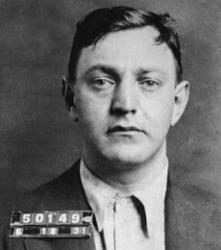
Dutch Schultz was one of the most feared underworld figures of Prohibition-era New York, a Bronx-born gangster who built a bootlegging empire and expanded into illegal gambling. Born Arthur Flegenheimer, he survived prison, gang wars and two high-profile tax trials, only to be shot in a Newark restaurant after a dispute with fellow crime bosses over his plan to target prosecutor Thomas E. Dewey. His brief, violent rise became part of the mythology of organized crime in America.
Early Life and a New Name
Schultz was born Arthur Flegenheimer on August 6, 1902, in the Bronx, New York City, to Herman Flegenheimer, a glazier and baker, and Emma Neu. His father left the family or died when Arthur was still young; accounts differ on what happened. His mother supported the household by taking in laundry, and Arthur left school before completing sixth grade. He worked a succession of jobs, including newspaper seller, office boy, printer’s apprentice and roofer.
The path from day labor to crime began early. In 1919, at age 17, he was convicted of burglary and sent to a reformatory. After his release, he adopted the name Dutch Schultz, borrowing it from a local tough known for his brawling reputation. The nickname would become the public identity of a man whose given name was often absent from the headlines.
Building a Bronx Bootlegging Operation
Prohibition transformed illegal alcohol into a lucrative business. Schultz partnered with Joey Noe, an associate from the Bronx, and built a beer-distribution operation that used intimidation to force saloons to buy from them. Their enterprise spread beyond the Bronx into Manhattan, where it collided with rival gangs.
The competition was violent. Schultz’s organization became entangled in conflicts with the gangs of Legs Diamond and Vincent “Mad Dog” Coll. Noe was killed during the feud with Diamond’s group. Schultz’s side later prevailed in the contests for territory, but the violence made his name synonymous with the ruthless expansion of New York’s bootleg trade.
As the 1920s ended and Prohibition gave way to new criminal markets, Schultz diversified. His network moved into illegal gambling, including slot machines and the “policy” numbers racket, an illicit lottery popular in working-class neighborhoods. He used force and political influence to protect the business, becoming a major power in the New York underworld.
Tax Trials and the Dewey Conflict
Authorities pursued Schultz over unpaid taxes as well as the criminal activity behind his fortune. A 1935 tax-evasion case in Syracuse ended with a hung jury. In a second trial, held in Malone, New York, he was acquitted after the jury concluded prosecutors had not proved the case. The acquittal did not end his exposure to law enforcement: another federal tax indictment followed later that year.
New York special prosecutor Thomas E. Dewey was also seeking to dismantle the illegal policy operation. Schultz reportedly considered arranging Dewey’s assassination. The recently formed Mafia Commission refused to approve a hit on such a prominent public figure, whose murder would bring an intense crackdown. The episode exposed how even an independent crime boss could be constrained by the collective interests of the underworld’s leadership.
Death in Newark
On the night of October 23, 1935, gunmen attacked Schultz and members of his crew at the Palace Chop House in Newark, New Jersey. Schultz was shot along with several associates and taken to hospital. He died the following day, October 24, aged 33. The killers did not leave him able to identify them, and the attack has been linked to his conflict with the crime bosses over the Dewey plan.
As he lay dying, Schultz gave police a rambling statement that offered no clear account of the shooting. The attack removed a powerful figure from New York’s criminal landscape, while also showing that the organizations around him could set limits on the ambitions of individual bosses.
Legacy
Schultz’s story occupies a grim place in the history of American organized crime: a working-class Bronx youth who entered the gang world, built a fortune through bootlegging and gambling, and died in a calculated act of underworld violence. His rise was inseparable from Prohibition’s market for illegal alcohol and from the rivalries that shaped New York’s criminal networks. His nickname outlived him, but behind the legend was Arthur Flegenheimer, a man whose career ended before his thirty-fourth birthday.