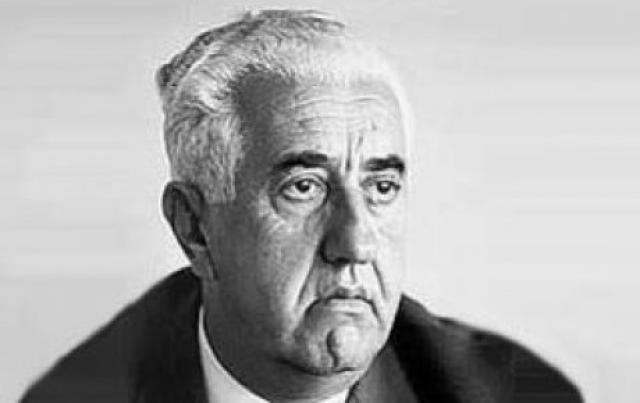
Dzemal Bijedic
- Early Life and Education
- Political Activism and World War II
- Post-War Career
- High-Level Positions
- Prime Minister of Yugoslavia
- Tragic Death
- Legacy
Early Life and Education
Džemal Bijedić, a prominent Yugoslavian and Bosnian statesman, was born on April 22, 1917, in Mostar, present-day Bosnia and Herzegovina. Descended from a family of wealthy merchants, he received his primary and secondary education in his hometown before pursuing a law degree at the University of Belgrade.
Political Activism and World War II
As a student, Bijedić became actively involved in Islamic and revolutionary youth movements. He joined the League of Communist Youth of Yugoslavia in 1938 and the Communist Party of Yugoslavia in 1939. Upon the outbreak of World War II, he participated in the Yugoslav Partisan movement led by Josip Broz Tito. Bijedić held significant positions within the communist organization, including that of Secretary of the Sarajevo City Committee and Secretary of the Tuzla City Committee. He also fought in several battles, notably the Battle of the Sutjeska.
Post-War Career
After the war, Bijedić played a key role in the establishment of the People's Republic of Bosnia and Herzegovina. He served as General Secretary of the Government and later assumed various leadership positions within the Communist Party of Bosnia and Herzegovina. In 1963, he played a prominent role in drafting the new Yugoslav Constitution.
High-Level Positions
In the early 1960s, Bijedić joined the Federal Executive Council in Belgrade, where he held positions related to legislation and labor. He also served as Secretary of the Constitutional Commission of the Federal Assembly. Following political conflicts, he returned to Sarajevo in 1965. From 1967 to 1971, he headed the Presidency of the National Assembly of Bosnia and Herzegovina.
Prime Minister of Yugoslavia
In 1971, Bijedić was appointed President of the Federal Executive Council, a position equivalent to Prime Minister of Yugoslavia. During his tenure, he played a significant role in recognizing Bosnian Muslims as a distinct nationality within Yugoslavia. Bijedić represented Yugoslavia in 50 official state visits, including high-level meetings with world leaders such as Gerald Ford, Leonid Brezhnev, and Mao Zedong.
Tragic Death
On January 18, 1977, Bijedić was accompanying President Tito on a state visit to Libya. While returning to Sarajevo on a Learjet 25, the aircraft crashed near Mount Inač, killing Bijedić, his wife, and several others. The cause of the crash remains disputed, with some theories suggesting foul play.
Legacy
Džemal Bijedić is remembered as a prominent figure in Yugoslav and Bosnian history. His contributions to the development of Bosnia and Herzegovina, his recognition of the Bosnian Muslim identity, and his diplomatic efforts have left a lasting impact on the region.





