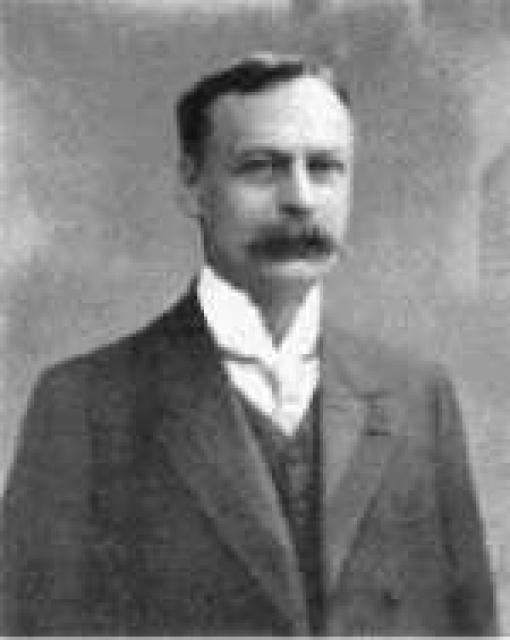
Eduard Shavann
 France
Biography of Eduard Chavannes
Eduard Chavannes was a French archaeologist and sinologist, known for his contributions to the field of Chinese studies. He was born into an old Protestant family in the late 16th century and was the second child, whose birth cost his mother her life. He was raised by his grandmother in Lausanne and later attended high school in Lyon.
Chavannes developed an interest in China after entering the École Normale Supérieure. In 1889, he was sent to Beijing as a member of a diplomatic mission without specific duties. During his time in Beijing, he became proficient in the Chinese language and focused his studies on Sima Qian, the first great Chinese historian who laid the foundation for the genre of dynastic chronicles.
In 1890, Chavannes published his first translation, the 28th chapter of Sima Qian's "Historical Records," in a journal. He married the daughter of a Lyon ophthalmologist that same year. Chavannes also became interested in the archaeological remains of the Han dynasty, which had been discovered by Chinese scholars in the 18th century.
In 1893, while still in Beijing, Chavannes was appointed as the head of the Department of Chinese Language and Literature at the Collège de France, becoming the fourth person to hold this position. He delivered his inaugural lecture as a professor on December 5, 1893. Chavannes' most notable achievement was his translation of Sima Qian's "Historical Records," of which he translated 47 out of 130 chapters. The translation was reissued by UNESCO in the 1960s.
Chavannes became the scientific secretary of the Paris Asian Society in 1895 and a delegate to the 14th Congress of Orientalists held in Algeria in 1904. He presented a report on unique gates from the Yuan dynasty, with inscriptions in Sanskrit, Tibetan, Mongolian, Tangut (Xixia), and Chinese characters. He also served as one of the editors of the leading sinological journal, "T'oung Pao," from 1904.
In the early 20th century, Chavannes became interested in Buddhist studies, particularly in the travel accounts of Chinese pilgrims to India. He pioneered the study of Chinese epigraphy found in religious sites in India. He also conducted archaeological excavations in China from 1906 to 1908, in which the Russian sinologist V.M. Alekseev also participated.
Chavannes' research on the divination bones of the Yin dynasty, known as "oracle bones," earned him recognition and he was elected as a full member of the Royal Asiatic Society in London in 1916. However, his health was weakened by the trials of World War I, and he died on January 29, 1918, from severe exhaustion.
Throughout his career, Chavannes emphasized the need for a comprehensive history of China, including its ideological currents. He conducted field research in China to survey ancient cultural monuments and believed that understanding the ancient Chinese mindset was crucial to interpreting their religious traditions. He argued that the ancient religion of China, preserved in the form of Daoism, remained unchanged until the early 20th century. Chavannes also viewed Confucianism as a major obstacle to China's modernization, while considering China's history as an integral part of world history.


