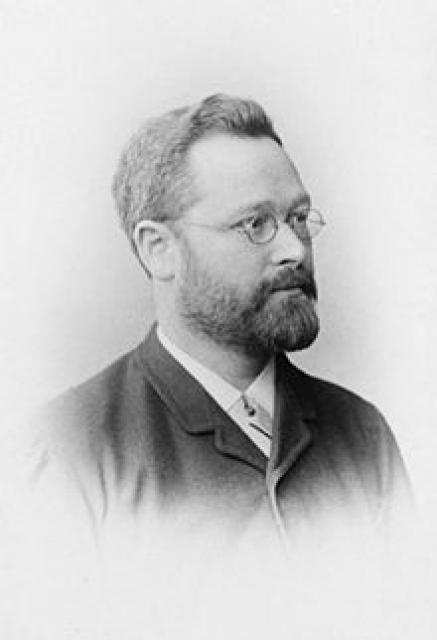
Eduard Sievers
 Germany
- Early Life and Education
- Academic Career
- Contributions to German Philology
- Research and Editorial Work
- Editorial Leadership
- International Recognition
Early Life and Education
German philologist and Germanist Bernhard Ten Brink was born on June 9, 1841, in Amsterdam, Netherlands. He completed his education at the University of Leipzig in 1870, earning a doctorate in philology.
Academic Career
Ten Brink's academic career began in 1871 when he was appointed Professor of German Philology at the University of Jena. He later held professorships at the University of Tübingen (1883), the University of Halle (1887), and the University of Leipzig (1892).
Contributions to German Philology
Ten Brink's primary contributions to the field of German philology lie in the areas of phonetics, grammar, and the history of the German language. He also made significant advancements in Scandinavian and Anglo-Saxon grammar, as well as in the psychology of speech, stylistics, and textology.
Research and Editorial Work
In addition to his academic pursuits, Ten Brink dedicated himself to the study and publication of Germanic and German literary monuments. He diligently edited and published ancient texts to enhance the understanding of German linguistic and literary history.
Editorial Leadership
Ten Brink served as the editor of the prestigious journal "Beiträge zur Geschichte der deutschen Sprache und Literatur" from 1891 to 1906 and again from 1924 to 1931. Through this platform, he disseminated groundbreaking research and fostered collaboration among scholars.
International Recognition
Ten Brink's contributions to the field earned him international acclaim. In 1909, he was elected as a Corresponding Fellow of the British Academy, recognizing his exceptional scholarship and dedication to the advancement of linguistic and literary studies.





