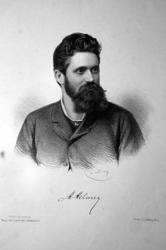
Eduard van der Null
 Austria
- Eduard van der Nüll: A Visionary Architect and Tragic Figure
- Collaboration and Recognition
- Vienna State Opera: A Masterpiece with a Tragic Aftermath
- Controversial Criticism and Suicide
- Legacy and Remembrance
Eduard van der Nüll: A Visionary Architect and Tragic Figure
Early Life and CareerEduard van der Nüll was born into an Austrian family of architects. His early life and architectural education remain shrouded in some mystery, but he emerged as a prominent figure in the mid-19th century.
Collaboration and Recognition
Van der Nüll was closely associated with August Sicard von Sicardsburg, another renowned Austrian architect. Together, they collaborated on numerous prestigious projects, including the Vienna Arsenal. Van der Nüll's expertise in design and Sicardsburg's skills in engineering proved to be a formidable combination.
Vienna State Opera: A Masterpiece with a Tragic Aftermath
Van der Nüll's most famous work was the Vienna State Opera, designed and constructed from 1861 to 1869. It was a testament to his architectural vision and technical prowess. However, the building's grandeur was met with harsh criticism from the public.
Controversial Criticism and Suicide
The Vienna State Opera faced widespread criticism for its perceived lack of height. The rise in street level by one meter had diminished its grandeur, making it appear squat. The building was derisively dubbed the "Königgrätz of Art," comparing it to the Austrian defeat at the Battle of Königgrätz. Emperor Franz Joseph I himself joined in the chorus of disapproval.
Unable to withstand the onslaught of criticism, van der Nüll committed suicide by hanging on April 4, 1868. His tragic demise shocked the city and forced the Emperor to reconsider his approach to critiquing art.
Legacy and Remembrance
Despite his untimely death, van der Nüll's legacy as an influential architect endures. His architectural contributions to Vienna include the Vienna Arsenal, a testament to his collaborative partnership with Sicardsburg. He is buried in the Vienna Central Cemetery, and a street in the Austrian capital bears his name.