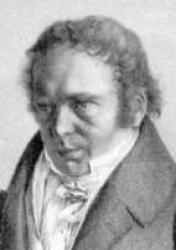
Edward Blyth
 Great Britain
- Edward Blyth: The Pioneer of Indian Zoology
- Arrival in India and Museum Curatorship
- Ornithological Contributions
- Notable Avian Discoveries
- Later Years and Legacy
Edward Blyth: The Pioneer of Indian Zoology
Early Life and EducationEdward Blyth, a renowned English zoologist and pharmacist, was born in London on December 23, 1810. His passion for natural history ignited from a young age, and he pursued his education in the field.
Arrival in India and Museum Curatorship
In 1841, Blyth embarked on a journey to India, where he took up the position of Curator of the Royal Asiatic Society of Bengal Museum. As a curator, he dedicated himself to modernizing the museum's catalogs, which culminated in the publication of the "Catalogue of the Birds of the Asiatic Society" in 1849.
Ornithological Contributions
Despite his physical limitations, Blyth made significant contributions to ornithology. He meticulously described bird species based on specimens collected by renowned naturalists such as Allan Octavian Hume, Samuel Tickell, and Robert Swinhoe. His expertise extended to identifying previously unknown species and naming them, leading to the recognition of several bird species named in his honor.
Notable Avian Discoveries
Among the species described by Blyth are:- Blyth's Hawk-eagle(Spizaetus alboniger)
- Blyth's Reed Warbler(Acrocephalus dumetorum)
- Blyth's Swift(Xiphirhynchus superciliaris)
- Blyth's Leaf Warbler(Phylloscopus reguloides)
- Tickell's Brown Hornbill(Anorrhinus tickelli )
- Blyth's Hornbill(Rhyticeros subruficollis )
- Dwarf Cassowary(Casuarius unappendiculatus )
Publication and Recognition
Blyth's contributions to ornithology extended beyond museum work. In 1881, he published a comprehensive work titled "The Natural History of the Cranes." His dedication to advancing knowledge and his keen eye for detail earned him recognition as one of the pioneers of Indian zoology.
Later Years and Legacy
Blyth returned to England in 1862 due to declining health. Despite his absence from India, his work continued to inspire future generations of naturalists. Edward Blyth's legacy lives on in the taxonomy of Indian birds and his fundamental contributions to the field of ornithology.