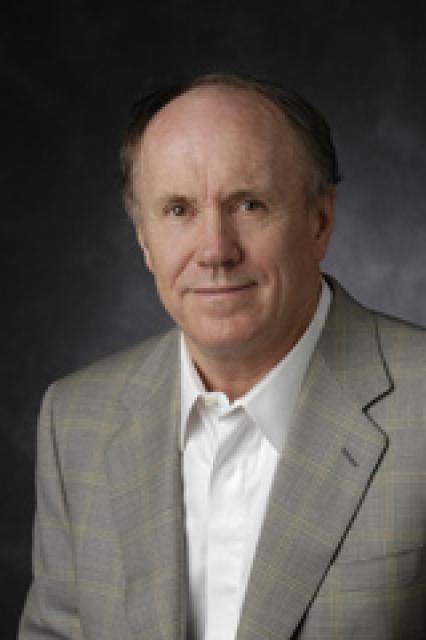
Edward Christian Prescott
 USA
USABiography of Edward Christian Prescott
Edward Christian Prescott, an American economist, was born on December 26, 1940, in Glens Falls, New York. He is the son of Mathilde Helwig Prescott and William Clyde Prescott. Prescott earned a bachelor's degree in mathematics from Swarthmore College in 1962, where he was a member of the fraternity "Delta Upsilon." He then obtained a master's degree in operations research (systems analysis) from Case Western Reserve University in 1963 and a Ph.D. in economics from Carnegie Mellon University in 1967. From 1966 to 1971, Prescott taught at the University of Pennsylvania. He later returned to Carnegie Mellon University, where he remained until 1980, before teaching at the University of Minnesota until 2003. In 1978, he was a visiting professor at the University of Chicago, and a year later, he joined Northwestern University until 1982. Since 2003, Edward has been teaching at Arizona State University's W.P. Carey School of Business. He is currently an economist at the Federal Reserve Bank of Minneapolis. Prescott is a leading figure in macroeconomics, particularly in the theory of business cycles and general equilibrium. His research has focused on the negative impact of taxes on the economy in Europe.
Contributions and Nobel Prize
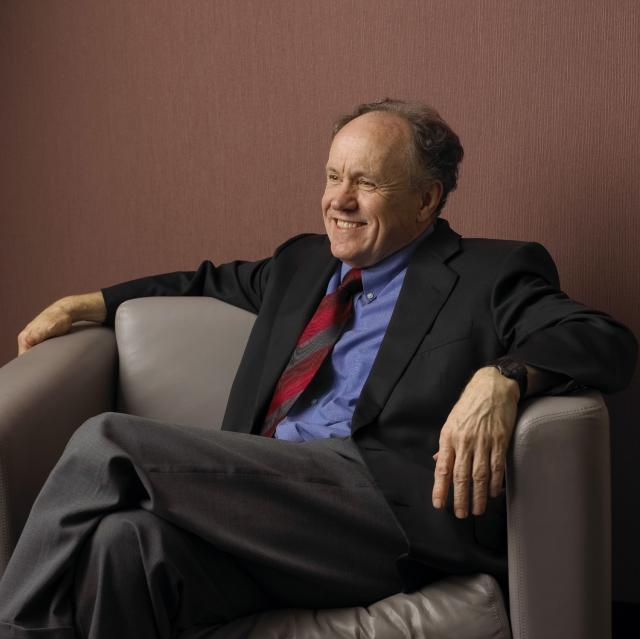
Prescott is ranked 11th among the most widely cited economists of our time, according to the IDEAS/RePEc ranking. In 2004, he received the Nobel Prize in Economics, sharing the award with Finn E. Kydland, for their contributions to dynamic macroeconomics: the time consistency of economic policy and business cycles. The majority of their research in this field was conducted while they were at the Graduate School of Industrial Administration at Carnegie Mellon University. Prescott is known for his work with the Hodrick-Prescott filter, which is used to smooth time series fluctuations. He and Kydland were awarded the Nobel Prize for their work presented in two joint papers. In the first paper, "Rules Rather Than Discretion" (1977), the authors argued that the goals of economic planning and policy are to elicit the desired response from the economy. In their second paper, "Time to Build and Aggregate Fluctuations" (1982), Prescott and Kydland claimed that shifts in demand are typically caused not only by long-term trends but also by short-term fluctuations in business cycles. To study this hypothesis, Prescott developed a model to monitor changes in production, investment, consumption, labor productivity, and employment from the end of World War II to the 1980s. Using this model, Kydland and Prescott were able to attribute 70% of fluctuations in output to changes and growth in technology.
Political Activism

In January 2009, Edward, along with more than 250 other economists and professors, signed an open letter to President Barack Obama protesting against the American Economic Recovery and Reinvestment Act. The letter, supported by the libertarian think tank, the Cato Institute, was published in several newspapers, including the New York Times and the Arizona Republic. Recently, Prescott's work has focused on studying the negative impact of taxes on the economy in Europe.