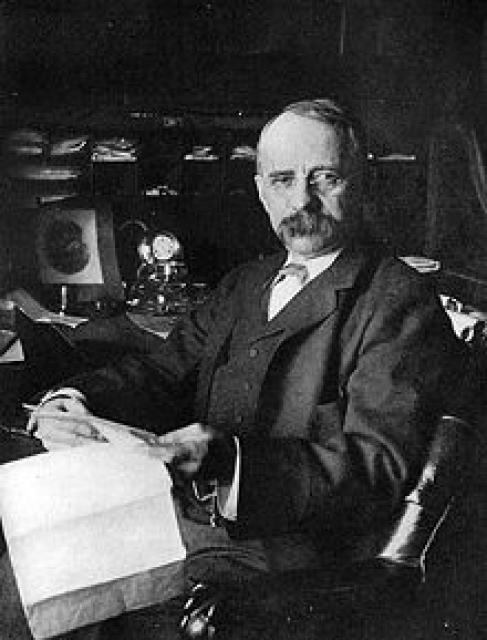
Edward Harriman
 USA
USA- Railroad Tycoon and Financier
- Wall Street Career
- Railroad Magnate
- Real Estate Investments
- Conservationist Legacy
- Scientific Expeditions and Cultural Diplomacy
- Later Life and Legacy
Railroad Tycoon and Financier
Early Life and EducationEdward Henry "Ned" Harriman was born in Hempstead, New York, to Orlando Harriman Sr., an Episcopal priest, and Cornelia Neilson. At the tender age of 14, he left school and became an errand boy on Wall Street in New York City, where his uncle Oliver Harriman had already made a name for himself.
Wall Street Career
Starting modestly, Harriman rose through the ranks rapidly, becoming a member of the New York Stock Exchange at the age of 22. Through his father-in-law, a banker and president of the Ogdensburg and Lake Champlain Railroad, Harriman developed an interest in railroads.
Railroad Magnate
In 1881, Harriman purchased the defunct Lake Ontario Southern Railroad, which he renamed, repaired, and sold at a significant profit to the Pennsylvania Railroad. He continued to acquire and rehabilitate bankrupt railroads, earning a reputation as a savvy railroad financier.
Real Estate Investments
In 1885, Harriman purchased the Arden estate, encompassing 7,860 acres near Tuxedo, New York. Over the next several years, he acquired an additional 20,000 acres, adding riding trails and a grand 100,000-square-foot residence known as Arden House.
Conservationist Legacy
After Harriman's death, his widow donated 10,000 acres of his estate to the State of New York, creating Harriman State Park.
Scientific Expeditions and Cultural Diplomacy
In 1899, Harriman sponsored a scientific expedition to the Alaskan coast, traveling on the luxurious steamship George W. Elder. In 1905, after a visit to Japan, he returned home with six jiu-jitsu wrestlers, including judo masters Tsunejiro Tomita and Mitsuyo Maeda. These wrestlers performed demonstrations in the United States, promoting the martial art and building cultural bridges.
Later Life and Legacy
Harriman died in 1909, leaving an estimated fortune of $70-$100 million to his wife. He was remembered by naturalist John Muir as "admirable in nearly all ways." As a railroad tycoon, financier, conservationist, and cultural diplomat, Edward Henry Harriman made significant contributions to American history.