Edward W. Morley
- From theology to chemistry
- Measuring oxygen
- The Michelson-Morley experiment
- A life in teaching and research
- Legacy
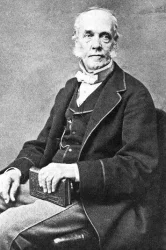
Edward W. Morley was an American chemist whose meticulous experiments reshaped two fields. He spent eleven years refining the measured atomic weight of oxygen, and he joined physicist Albert A. Michelson in an experiment that found no detectable motion of Earth through the hypothetical luminiferous ether. The result did not by itself create modern physics, but it became an important challenge to nineteenth-century ideas about light and space.
From theology to chemistry
Morley was born in Newark, New Jersey, on 29 January 1838, the son of a Congregational minister and a schoolteacher. He attended Williams College, graduating in 1860, and then studied at Andover Theological Seminary. He was ordained in the Congregational Church and briefly served as a minister in Ohio.
His interest in science, especially chemistry, grew alongside his religious work. In 1869, he accepted a position teaching chemistry at Western Reserve College in Hudson, Ohio, later part of Case Western Reserve University. He remained at the college for decades, balancing classroom teaching with exacting laboratory research.
Measuring oxygen
From the late 1870s into the 1890s, Morley investigated the composition of the atmosphere and the relative atomic weights of hydrogen and oxygen. Determining these quantities precisely required carefully purifying gases and measuring their reactions. His most celebrated chemical work compared the mass of hydrogen and oxygen consumed in forming water with the mass of the water produced.
In 1895, he published a value for oxygen’s relative atomic weight of about 15.879 when hydrogen was taken as 1. This was a remarkably precise result for the era and challenged the “Prout hypothesis,” which proposed that the atomic weights of all elements were whole-number multiples of hydrogen’s. Morley’s careful procedures set a high standard for quantitative chemistry.
The Michelson-Morley experiment
Morley’s best-known work came through his collaboration with Michelson, a physicist at the nearby Case School of Applied Science. Many scientists then believed that light waves traveled through an invisible medium called the ether. If Earth moved through this medium, light traveling in different directions might appear to move at slightly different speeds.
To test the idea, Michelson and Morley used an interferometer, an instrument that splits a beam of light and compares the paths of the resulting beams. Their 1887 experiment was designed to detect the expected difference as Earth moved through the ether. They found no significant variation: the anticipated “ether wind” was not detected.
The result became known as the Michelson-Morley experiment. It did not prove that the ether could not exist in any form, nor did it alone establish relativity. But it placed a demanding experimental result before physicists and contributed to a growing reassessment of space, motion, and the propagation of light. The experiment’s lasting importance lies partly in how an unexpected null result redirected scientific thought.
A life in teaching and research
Morley was known for patient, painstaking work rather than public spectacle. He served as president of the American Association for the Advancement of Science in 1895 and the American Chemical Society in 1899. In 1907, the Royal Society awarded him the Davy Medal in recognition of his chemical research.
He retired from teaching in 1906 and spent his later years in Connecticut. Morley died on 24 February 1923, aged 85. By then, the experiment he had conducted with Michelson had become a landmark in the history of physics, while his work on oxygen remained an example of exceptionally careful chemical measurement.
Legacy
Morley’s career demonstrates how scientific progress can emerge from precise measurement as much as from sweeping theory. His oxygen research strengthened the standards of experimental chemistry, while the Michelson-Morley experiment gave later physicists a crucial result to explain. Both achievements grew from the same habit of mind: design the test carefully, measure the quantities closely, and accept what the evidence shows—even when it is not what theory predicts.